Quick Answer
The first 30 days after smoking cessation represent a critical window when the lungs begin intensive healing processes that can be dramatically enhanced with structured intervention. This evidence-based 30-day protocol progresses through four phases: Week 1 focuses on establishing baseline assessment, airway clearance fundamentals, and hydration optimization; Week 2 introduces respiratory muscle training, diaphragmatic breathing restoration, and walking progression; Week 3 advances to huff coughing mastery, inspiratory muscle resistance training, and nutritional anti-inflammatory support; Week 4 integrates all components into a sustainable long-term maintenance plan. Each phase builds upon the previous, with daily exercises that progressively challenge and strengthen the respiratory system. Click here to learn more about Lung Reborn →
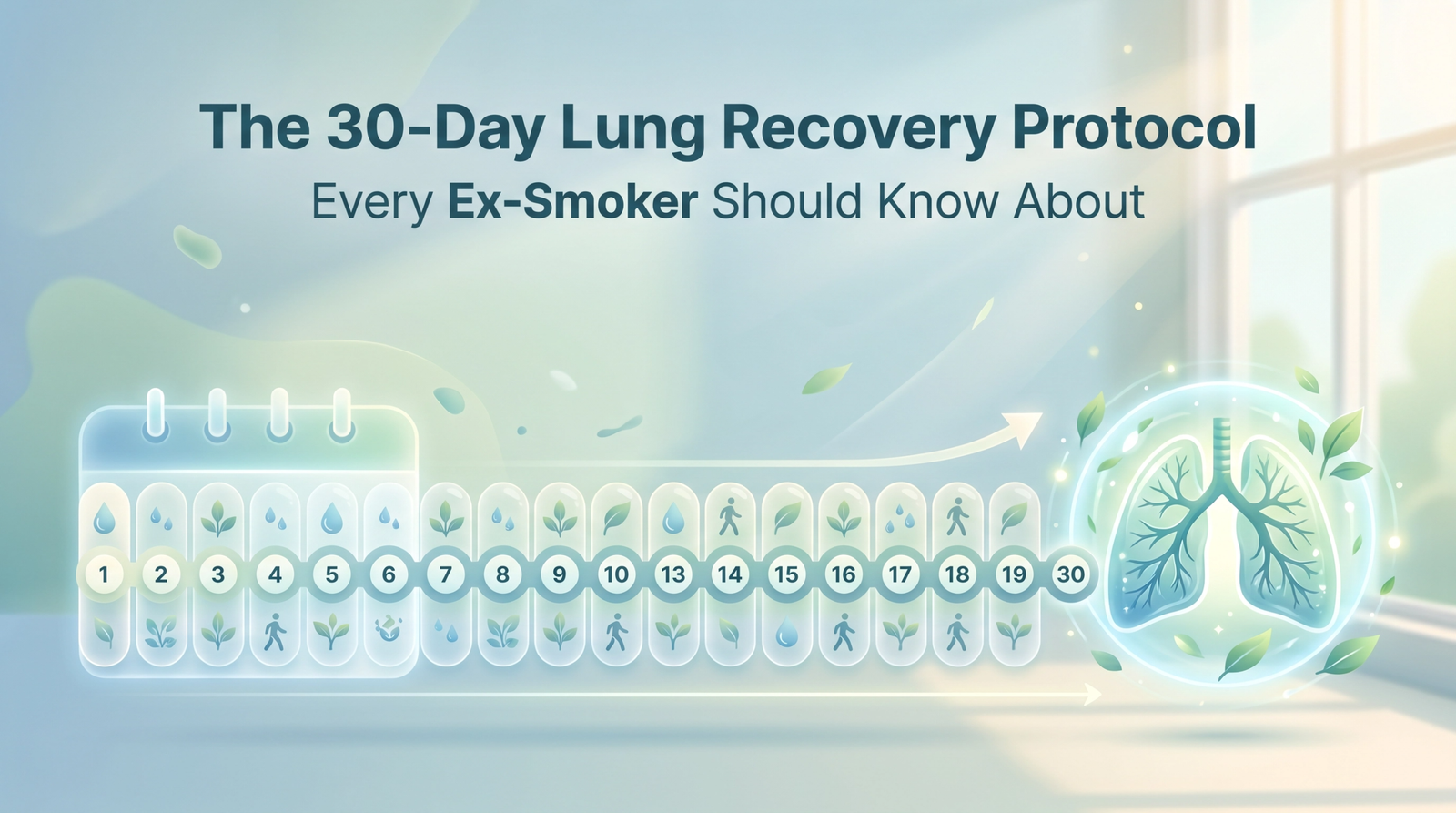
The 30-Day Lung Recovery Protocol Every Ex-Smoker Should Know About
The cigarette was extinguished for the last time. Whether that final cigarette was smoked yesterday or last year, a clock began ticking in your respiratory system, a cascade of molecular events that, given the right support, can transform your lung health more dramatically than you might imagine. But recovery does not happen automatically, nor does it happen optimally without deliberate intervention.
This protocol is for the ex-smoker who wants to do more than simply “not smoke.” It is for those who want to actively reclaim what years of tobacco exposure took from their respiratory system. It is structured, progressive, and grounded in the clinical evidence accumulated over decades of pulmonary rehabilitation research.
Before beginning, two prerequisites are non-negotiable. First, you must have stopped smoking. This protocol cannot repair damage while ongoing injury continues. Second, you must have consulted your physician, particularly if you have been diagnosed with COPD, asthma, or any other respiratory condition. This protocol complements medical care; it does not replace it.
Foundation Principles: Understanding the Four Pillars of Lung Recovery
Every element of this 30-day protocol rests on four evidence-based pillars that together address the major reversible components of smoking-related lung impairment:
Pillar 1: Airway Clearance. Years of smoking have paralyzed your cilia and thickened your mucus. Effective clearance removes the accumulated debris, bacteria, and inflammatory mediators that perpetuate airway damage. Without clearance, the other pillars cannot function optimally.
Pillar 2: Respiratory Muscle Training. The diaphragm and intercostal muscles have been operating inefficiently, often against the mechanical disadvantage of hyperinflated lungs. Targeted strengthening reduces the work of breathing and improves ventilation.
Pillar 3: Breathing Pattern Optimization. Most smokers and ex-smokers breathe rapidly and shallowly, perpetuating air trapping and dyspnea. Retraining to slower, deeper breathing with prolonged expiration reduces dynamic hyperinflation and improves gas exchange.
Pillar 4: Systemic Anti-Inflammatory Support. Local airway inflammation receives attention through inhalers, but the systemic inflammation that characterizes smoking-related disease requires broader intervention through exercise, nutrition, sleep, and stress management.
Week 1: Foundation — Establishing the Basics
The first week focuses on assessment, hydration, and fundamental techniques. Do not rush. The quality of your foundation determines the height of the structure you can build upon it.
Week 1 Daily Protocol (Days 1-7)
- Morning: Begin with 8-16 oz of warm water. Perform 5 minutes of relaxed diaphragmatic breathing while seated comfortably.
- Mid-morning: Complete first huff coughing session (5 cycles of 2-3 huffs). Expect increased mucus production as clearance improves.
- Afternoon: 10-minute easy walk at conversational pace. Focus on nasal breathing if possible.
- Evening: Complete second huff coughing session. Perform 5 minutes of pursed-lip breathing (inhale 2 counts, exhale 4 counts).
- Before bed: Write in recovery journal: mucus color/consistency, breathlessness level (0-10), energy level, sleep quality.
- Throughout day: Maintain hydration target of half your body weight in ounces of water (e.g., 160 lb person = 80 oz).
During Week 1, expect your cough to actually increase in productivity. This is desirable. The cilia, beginning to recover function after smoking cessation, are moving mucus that has been stagnant for years. The color may range from clear to gray to brownish as old tobacco residue is expectorated. This is the “spring cleaning” phase of lung recovery.
Mastering the Huff Cough
The huff cough is the cornerstone airway clearance technique. Unlike forceful coughing, which exhausts you and can trigger bronchospasm, the huff cough moves mucus efficiently with minimal fatigue:
- Take a slow, deep breath in through your nose, filling your lungs to about 75% capacity
- Hold the breath for 2-3 seconds
- Exhale forcefully but slowly, saying “huff” as you do, keeping your mouth and throat open (not a explosive cough)
- Follow with 1-2 normal breaths
- Repeat the huff 2-3 times, then perform a strong cough if mucus has moved to the central airways
Practice this technique until it feels natural. It will be your primary airway clearance tool throughout the protocol and beyond.
Week 2: Building — Introducing Resistance and Progression
With basic techniques established, Week 2 introduces training loads and begins the progression toward meaningful functional improvement.
Week 2 Daily Protocol (Days 8-14)
- Morning: 8-16 oz warm water. 5 minutes diaphragmatic breathing. Introduce inspiratory muscle training: 15 breaths through resistive device at lowest setting (or through a straw).
- Mid-morning: Huff coughing session (increase to 8-10 cycles). Add postural drainage: lie on each side for 3 minutes with head slightly lowered before huffing.
- Afternoon: Walking progression to 15 minutes. Introduce intervals: 2 minutes normal pace, 1 minute slightly faster (still able to speak), repeat.
- Evening: Pursed-lip breathing extended to 8 minutes. Add resonant breathing: 5 minutes at 5 breaths per minute (inhale 6 seconds, exhale 6 seconds).
- Before bed: Recovery journal. Track morning peak flow if you have a peak flow meter.
Introducing Inspiratory Muscle Training
Inspiratory muscle training (IMT) using a handheld resistive device is one of the most evidence-based interventions for improving respiratory muscle strength. If you have access to a device, begin at the lowest resistance setting. If not, breathing through a narrow straw provides effective resistance for beginners.
The protocol: 15 vigorous inspirations through the device, twice daily. Allow normal exhalation between breaths. Over the coming weeks, progressively increase resistance as the current setting becomes comfortable.
Walking Progression Principles
The walking program serves dual purposes: cardiovascular conditioning and breathing practice. The goal is to challenge your breathing enough to stimulate adaptation, but not so much that you trigger distress. Use the “talk test”: you should be able to speak in complete sentences during your walk. If you cannot, slow down.
Week 3: Intensification — Deepening the Practice
Week 3 increases training loads, introduces nutritional optimization, and refines technique. This is where many patients begin noticing subjective improvement.
Week 3 Daily Protocol (Days 15-21)
- Morning: Warm water. Diaphragmatic breathing 5 minutes. IMT increased to 20 breaths at progressively higher resistance.
- Mid-morning: Extended airway clearance session (15 minutes) incorporating oscillating PEP device if available, or continued huff coughing with postural drainage in multiple positions.
- Lunch: Anti-inflammatory meal emphasizing omega-3 fatty acids (fatty fish, walnuts, flaxseed), colorful vegetables, and turmeric.
- Afternoon: Walking increased to 20 minutes with 3-minute intervals of slightly increased pace.
- Evening: Extended breathwork session: 10 minutes pursed-lip breathing, 5 minutes resonant breathing, 5 minutes diaphragmatic breathing.
- Before bed: Recovery journal. Begin tracking morning peak flow daily if available.
Nutritional Anti-Inflammatory Support
While the lungs are not detoxified by any specific food, dietary patterns can significantly influence the inflammatory environment in which recovery occurs:
- Omega-3 fatty acids: Found in salmon, mackerel, sardines, walnuts, and flaxseed, these compounds have well-documented anti-inflammatory properties.
- Antioxidant-rich foods: Berries, leafy greens, and colorful vegetables provide polyphenols that combat oxidative stress.
- Vitamin D: Deficiency is common in former smokers and associated with worse respiratory outcomes. Consider testing and supplementation if deficient.
- Hydration: Adequate fluid intake keeps mucus thin and easier to clear. Aim for pale yellow urine as a marker of adequate hydration.
- Limit pro-inflammatory foods: Processed meats, refined carbohydrates, and excess omega-6 fatty acids promote inflammation.
Week 4: Integration — Building a Sustainable Practice
The final week integrates all components into a personalized, sustainable long-term maintenance plan. The goal is not to complete a 30-day program and stop, but to establish habits that persist indefinitely.
Week 4 Daily Protocol (Days 22-30)
- Morning: Warm water. 10 minutes integrated breathwork (diaphragmatic + pursed-lip + resonant). IMT at challenging resistance, 25-30 breaths.
- Mid-morning: Full airway clearance session (15-20 minutes) with multiple positions and techniques.
- Lunch: Anti-inflammatory meal pattern.
- Afternoon: Walking 25-30 minutes with interval progression. Add gentle hills if tolerated.
- Evening: 10 minutes resonant breathing for autonomic balance and stress reduction.
- Before bed: Recovery journal with weekly trend review.
Creating Your Maintenance Schedule
By Day 30, assess which components provided the most benefit and design your ongoing schedule. A typical maintenance protocol might include:
- Airway clearance: Once or twice daily, depending on mucus production
- IMT: Daily, with periodic resistance increases
- Walking: 5-6 days per week, 30 minutes
- Breathwork: 10-15 minutes daily, with longer sessions during high-stress periods
- Peak flow monitoring: Daily for the first 3 months, then as needed
- Recovery journal: Weekly review to catch early signs of decline
For ex-smokers seeking comprehensive guidance through this 30-day protocol, Click here to learn more about Lung Reborn →
Your 30-Day Lung Recovery Starts Now
Every day you wait is a day of healing delayed. The protocol is ready. Your lungs are ready. Take the first step toward active recovery today.
Click here to learn more about Lung Reborn →Pros and Cons: The 30-Day Lung Recovery Protocol
Protocol Benefits
- Progressive structure prevents overwhelming beginners
- Addresses all four pillars of lung recovery simultaneously
- Requires minimal equipment (water, optional IMT device)
- Produces both immediate and cumulative benefits
- Establishes sustainable habits rather than temporary fixes
- Can be adapted to any fitness or disease severity level
- Empowers ex-smokers with active recovery strategy
- Journal tracking provides objective feedback on progress
Realistic Considerations
- Requires 30-60 minutes daily commitment
- Initial increase in coughing may be alarming
- Benefits emerge gradually; patience required
- Not appropriate for active smokers
- Severe COPD may require physician-modified protocol
- Some techniques require practice to master
The Respiratory Connection
Respiratory Friends Centre believes that smoking cessation, while essential, is only the beginning of lung recovery. The ex-smoker who actively pursues rehabilitation achieves far more than one who simply waits passively for whatever healing occurs naturally. This 30-day protocol represents a commitment not just to stopping harm, but to actively promoting restoration. Every technique within it is supported by clinical evidence. Every day’s practice is an investment in the respiratory capacity you want for the decades ahead.
Frequently Asked Questions
Can I start this protocol while I’m still smoking?
No. Active smoking undermines every element of this protocol. The airway irritation from continued smoke exposure negates clearance efforts, the carbon monoxide impairs oxygen delivery during exercise, and the ongoing ciliary paralysis prevents mucus clearance. This protocol is specifically designed for ex-smokers. If you are still smoking, your first and only priority is cessation. Once you have stopped, this protocol will help you maximize recovery.
Why am I coughing MORE since starting the protocol?
This is expected and generally positive. The huff coughing technique, combined with improved ciliary function from smoking cessation, mobilizes mucus that has been stagnant in your airways for months or years. The initial increase in productive coughing typically peaks in Week 2 and gradually declines as airways clear. If mucus becomes thick, increase hydration. If you experience chest pain, fever, or shortness of breath beyond your baseline, contact your physician to rule out infection.
Do I need special equipment for this protocol?
The basic protocol requires no special equipment, only water, comfortable clothing, and walking shoes. An inspiratory muscle training device (approximately $30-60) significantly enhances the respiratory muscle training component. An oscillating PEP device (approximately $15-40) can enhance airway clearance. A peak flow meter ($10-20) allows objective tracking of lung function. These are helpful but not required for the first 30 days.
How do I know if the protocol is working?
Track multiple metrics in your recovery journal: morning peak flow (if you have a meter), mucus volume and color, breathlessness level during activities, walking distance or speed, sleep quality, and energy levels. Improvement typically follows a pattern: increased mucus production in Week 1-2 (clearing), reduced morning cough and breathlessness by Week 3-4, improved walking tolerance by Week 3-4, and progressive improvement thereafter. Not all metrics improve simultaneously; expect a gradual upward trend with normal day-to-day variation.
Can I do this protocol if I have diagnosed COPD?
Yes, with medical clearance. The protocol is designed to be adaptable to various severity levels. If you have moderate-to-severe COPD (FEV1 below 50%), discuss modifications with your physician: you may need to reduce walking intensity, increase rest periods, or modify IMT parameters. The airway clearance and breathing retraining components are beneficial at all severity levels. Never discontinue or reduce prescribed medications without medical guidance.
What should I do after the 30 days are complete?
Transition to a maintenance schedule that preserves your gains. Continue daily airway clearance (frequency adjusted to your mucus production), IMT 5-6 days per week, walking 5-6 days per week, and breathwork 10-15 minutes daily. Review your journal trends weekly. Consider repeating the intensive 30-day protocol annually or after exacerbations. The goal is to make lung recovery a permanent lifestyle, not a one-time event.
Is it normal to feel emotional during lung recovery?
Absolutely. Many ex-smokers experience grief, anxiety, irritability, or mood swings during early recovery. Nicotine withdrawal contributes, but so does the psychological adjustment to a new identity as a non-smoker and the confrontation with health consequences of past smoking. The breathwork components of this protocol, particularly resonant breathing, can help regulate emotional states. If emotional distress is severe or persistent, consider support groups or counseling specifically for smoking cessation.
Can vaping or nicotine replacement affect the protocol’s effectiveness?
Nicotine replacement therapy (patches, gum, lozenges) does not appear to significantly impair the physiological recovery processes targeted by this protocol and should not be discontinued if it supports smoking abstinence. Vaping, however, introduces airway irritation and potential toxicants that may interfere with ciliary recovery and clearance. The ideal is complete nicotine cessation eventually, but smoking cessation takes priority. If using vaping as a smoking cessation bridge, plan to taper and discontinue vaping as soon as feasible.
Key Takeaways
- The first 30 days after smoking cessation represent a critical window for active lung recovery intervention
- Effective recovery requires addressing four pillars: airway clearance, respiratory muscle training, breathing pattern optimization, and systemic anti-inflammatory support
- This progressive protocol builds skills and intensity over four weeks, establishing sustainable long-term habits
- Inspiratory muscle training and structured breathwork are evidence-based interventions with proven benefits
- Programs like Click here to learn more about Lung Reborn → provide detailed guidance and video instruction for the 30-day protocol
- Recovery is an ongoing process; the 30-day protocol establishes habits that should continue indefinitely
- Always work with your physician, particularly if you have diagnosed lung disease
Leave a Reply