Quick Answer
While the lung “reboot” metaphor should not be taken literally, the lungs possess remarkable regenerative capacity that most patients never fully exploit. After smoking cessation, the cilia lining your airways begin regenerating within days, mucus clearance improves within weeks, and the risk of lung cancer declines progressively over years. For COPD patients, while destroyed alveoli cannot be replaced, substantial functional improvement is achievable through airway clearance, mucus reduction, inflammation control, and respiratory muscle strengthening. Structured lung rehabilitation programs that combine targeted breathing exercises, airway clearance protocols, and lifestyle modifications can produce clinically meaningful improvements in symptoms, exercise capacity, and quality of life even years after diagnosis. Click here to learn more about Lung Reborn →
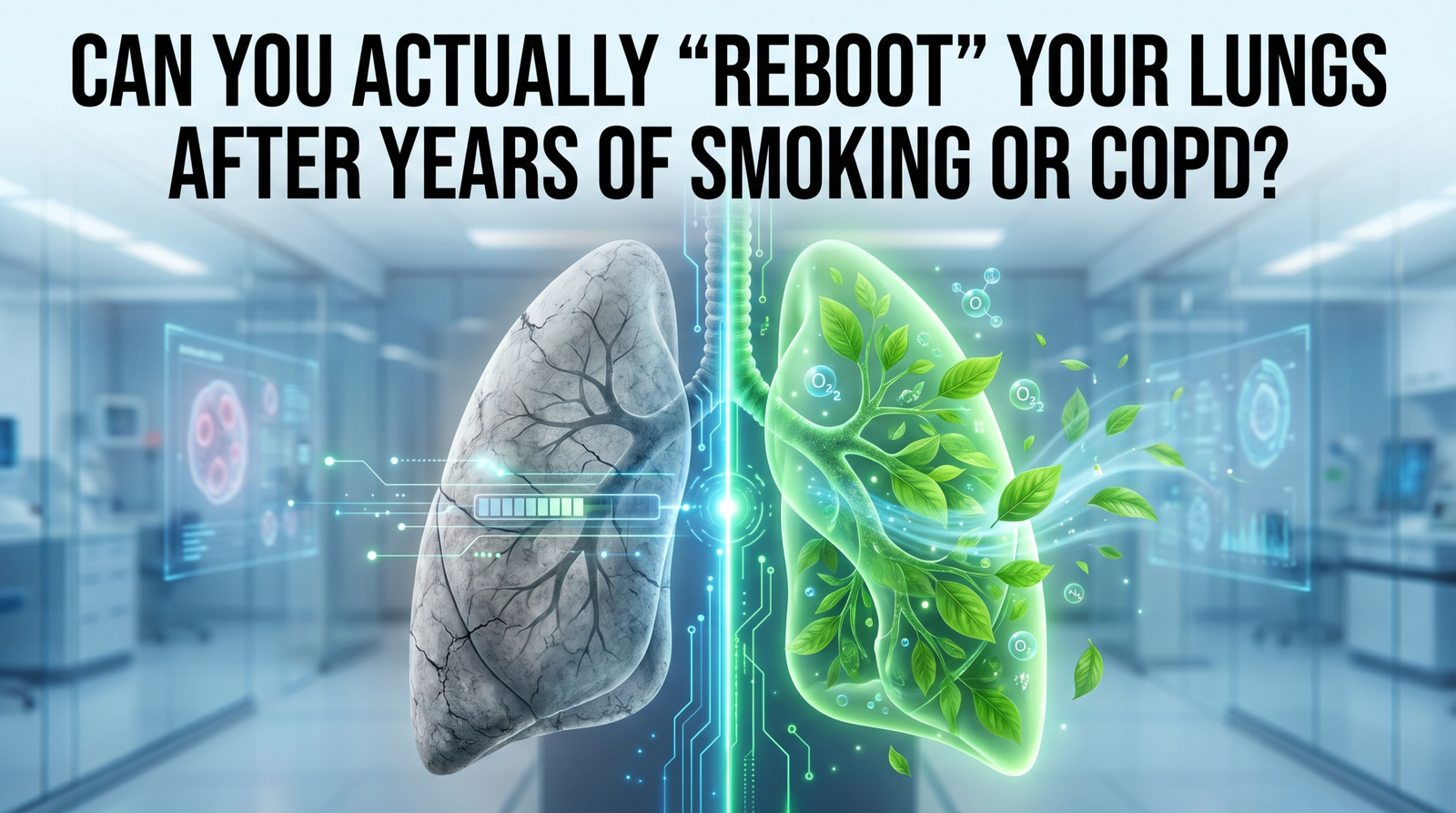
Can You Actually ‘Reboot’ Your Lungs After Years of Smoking or COPD?
The email arrived on a Tuesday morning, its subject line carrying the desperate hope that we see so often at Respiratory Friends Centre: “Is it too late for my lungs?” The sender, a 58-year-old former construction worker named David, had smoked for 35 years before quitting three years ago after a COPD diagnosis. His FEV1 was 48% of predicted. He used two inhalers daily and still got winded walking to his mailbox. And he had a question that haunted him every morning when he coughed up thick, gray mucus: “After everything I did to my lungs, is any recovery actually possible?”
David’s question is perhaps the most common and most important that we encounter. It sits at the intersection of medical science, human hope, and the hard reality of structural lung disease. The answer is nuanced, but it is not bleak. The lungs are not like the brain or the heart in their regenerative limitations. Under the right conditions, with the right interventions, meaningful recovery of function is not only possible but expected, even in the context of established COPD.
What the Lungs Can and Cannot Regenerate: A Realistic Assessment
To understand what is possible, one must first understand the anatomy. The lungs contain approximately 300 million alveoli, the tiny air sacs where gas exchange occurs. In emphysema, the walls of these alveoli are destroyed, creating larger, less efficient air spaces. These structural changes are, for practical purposes, irreversible. No current therapy can regrow destroyed alveolar walls.
However, the functional consequences of lung disease extend far beyond the alveoli, and many of these other elements retain substantial capacity for improvement:
Airway cilia: The hair-like projections that sweep mucus and debris out of the airways are exquisitely sensitive to cigarette smoke, which paralyzes and destroys them. Remarkably, ciliary function begins recovering within days of smoking cessation, and structural regeneration is well underway within 6-12 months.
Mucus-producing cells: Smoking causes hyperplasia of goblet cells and enlargement of submucosal glands, producing the chronic bronchitic cough that many patients endure. After smoking cessation, mucus hypersecretion gradually declines over months to years, though it may not normalize completely in long-term heavy smokers.
Airway inflammation: The chronic inflammatory infiltrate that characterizes COPD, including neutrophils, macrophages, and CD8+ T-cells, begins to diminish within weeks of smoking cessation. This anti-inflammatory effect produces immediate symptomatic improvement in many patients.
Respiratory muscles: The diaphragm and intercostal muscles respond to training much like any other skeletal muscle. Inspiratory muscle training produces measurable increases in strength and endurance even in advanced COPD, directly improving ventilation and reducing dyspnea.
Gas exchange efficiency: While alveolar surface area may not increase, optimizing ventilation-perfusion matching through better breathing patterns, mucus clearance, and reduced inflammation can improve oxygen transfer efficiency without requiring structural regeneration.
Mucociliary clearance: Beyond ciliary recovery, hydration, airway clearance techniques, and certain pharmacological interventions can restore effective mucus transport, reducing the chronic infection and inflammation that perpetuate disease progression.
The Science of Lung Regeneration: Emerging Possibilities
Research into lung regeneration has accelerated dramatically in recent years, revealing previously unsuspected plasticity in pulmonary tissue.
Scientists have discovered that the lungs contain endogenous stem and progenitor cells capable of regenerating damaged tissue under certain conditions. Type 2 alveolar epithelial cells can proliferate and differentiate into type 1 cells, replacing damaged gas-exchange surfaces. Basal cells in the airways can regenerate the entire airway epithelium. These processes occur constantly at a low level, and the question is not whether regeneration happens, but how to enhance it.
Several approaches show promise in preclinical and early clinical studies:
- Retinoic acid receptor agonists: Drugs that activate pathways involved in lung development have shown ability to reverse emphysematous changes in animal models, though human trials have yielded mixed results.
- Mesenchymal stem cell therapy: Infusions of stem cells derived from bone marrow or adipose tissue have shown anti-inflammatory and potentially regenerative effects in early-phase COPD trials.
- Growth factor therapies: Hepatocyte growth factor (HGF) and keratinocyte growth factor (KGF) promote epithelial repair and have been investigated as potential regenerative treatments.
- Lung volume reduction with coils or valves: While not regenerative per se, these procedures improve mechanical function by redirecting ventilation to healthier lung tissue, producing functional gains.
None of these approaches are yet established standard care. But their existence demonstrates that the lung is far more plastic than previously believed, and that the rigid “permanent damage” model of COPD is increasingly obsolete.
What Structured Lung Recovery Programs Actually Accomplish
While awaiting breakthrough regenerative therapies, patients have access to established interventions that produce meaningful functional improvement through mechanisms that are well understood and clinically validated.
Airway Clearance and Mucus Management
Chronic mucus retention drives infection, inflammation, and progressive airway damage. Effective clearance interrupts this cycle. Techniques including:
- Huff coughing: A technique that moves mucus without the exhausting fatigue of repeated forceful coughing
- Oscillating positive expiratory pressure (OPEP) devices: Handheld devices that create vibrations to loosen mucus while providing expiratory resistance
- Autogenic drainage: A three-phase breathing technique that moves mucus from peripheral to central airways for expectoration
- Postural drainage with percussion: Positions that use gravity to drain specific lung segments, sometimes combined with manual chest percussion
Regular airway clearance reduces chronic bacterial load, decreases exacerbation frequency, and improves symptoms even in the absence of structural change.
Respiratory Muscle Training
Inspiratory muscle training using resistive devices strengthens the diaphragm and accessory muscles, reducing the work of breathing and improving ventilation. Multiple meta-analyses confirm that IMT reduces dyspnea, improves exercise tolerance, and enhances quality of life in COPD patients.
Breathing Pattern Retraining
Many COPD patients develop rapid, shallow breathing patterns that worsen dynamic hyperinflation and dyspnea. Retraining to slower, deeper breathing with prolonged expiration reduces air trapping, improves gas exchange, and decreases the sensation of breathlessness. Pursed-lip breathing, diaphragmatic breathing, and paced breathing each contribute to this optimization.
Systemic Anti-Inflammatory Interventions
While inhaled corticosteroids target airway inflammation, systemic inflammation in COPD requires broader approaches. Regular exercise, dietary modifications including increased omega-3 fatty acid intake, weight optimization, and adequate sleep each contribute to reducing the chronic low-grade inflammation that perpetuates disease progression.
Click here to learn more about Lung Reborn →
The Message of Hope
If you have quit smoking, your lungs are already healing. Cilia are regenerating. Inflammation is subsiding. Mucus clearance is improving. The question is not whether recovery is possible, but how much recovery you can achieve with the right support. Structured programs exist to help you reach that maximum.
The Recovery Timeline: What to Expect After Smoking Cessation
Understanding the temporal pattern of lung recovery helps set realistic expectations and sustain motivation through the early months when visible improvement may be subtle.
Days 1-3
Bronchial tubes begin to relax. Carbon monoxide clears from blood. Oxygen levels normalize.
Weeks 1-2
Ciliary function begins recovering. Mucus clearance improves. Circulation improves. Lung function (FEV1) may begin slight improvement.
Months 1-3
Inflammatory markers decrease. Cough and shortness of breath begin improving in many patients. Lung function decline slows or stops.
Months 3-6
Ciliary regeneration substantial. Mucus hypersecretion continues declining. Exercise tolerance improves. Infections become less frequent.
Year 1 and Beyond
Risk of heart attack drops by 50%. Lung cancer risk begins progressive decline. Continued gradual improvement in symptoms with sustained smoking cessation. Structured rehabilitation programs produce additional functional gains.
Can You “Reboot” After COPD Is Established?
This is where nuance becomes essential. If “reboot” means returning to the lungs of a never-smoker, the answer for established COPD is no. Structural damage, particularly emphysematous destruction, is permanent with current technology.
However, if “reboot” means achieving substantial functional improvement, reducing symptoms, slowing progression, and reclaiming quality of life that was thought permanently lost, the answer is a resounding yes. And the degree of possible improvement often surprises both patients and physicians.
Pulmonary rehabilitation, the gold-standard comprehensive intervention for COPD, produces clinically significant improvements in exercise capacity, dyspnea, and quality of life even in patients with severe airflow obstruction. The magnitude of improvement often exceeds that produced by pharmacological interventions alone. And the benefits are dose-dependent: more comprehensive, more intensive programs produce greater results.
The key insight is that functional capacity depends on much more than FEV1. Respiratory muscle strength, breathing pattern efficiency, mucus clearance effectiveness, cardiovascular conditioning, nutritional status, emotional health, and sleep quality each contribute to how a patient actually feels and functions. Addressing these modifiable factors can produce transformative improvement even when spirometry is unchanged.
Maximize Your Lung Recovery Potential
Whether you quit smoking last week or ten years ago, there’s more recovery available than you think. Discover the structured protocol designed to unlock your lungs’ regenerative capacity.
Click here to learn more about Lung Reborn →Pros and Cons: Lung Recovery Programs
Benefits of Structured Recovery Programs
- Improve mucus clearance and reduce chronic infection risk
- Strengthen respiratory muscles and reduce work of breathing
- Retrain breathing patterns to reduce dynamic hyperinflation
- Reduce systemic inflammation through multiple mechanisms
- Improve exercise tolerance beyond what medications achieve
- Empower patients with active self-management tools
- Can produce meaningful gains even in advanced disease
- Complement and enhance pharmacological therapy
Realistic Limitations
- Cannot regenerate destroyed alveolar tissue
- Requires consistent practice for sustained benefit
- Results vary with disease severity and baseline function
- Not a substitute for smoking cessation (the single most important intervention)
- Does not replace prescribed medications
- Progress may be slow and require patience
The Respiratory Connection
Respiratory Friends Centre exists to bridge the gap between what medical science knows and what patients experience. The evidence for lung recovery after smoking cessation is robust and growing. The evidence for functional improvement in established COPD through structured rehabilitation is equally strong. Our role is to make these evidence-based approaches accessible, understandable, and actionable for every patient seeking to maximize their respiratory potential.
Frequently Asked Questions
How much lung function can I realistically recover after quitting smoking?
Former smokers typically see a small but measurable improvement in FEV1 within the first year after quitting, averaging 50-100 mL. More importantly, the rate of decline slows to match that of never-smokers, effectively halting the accelerated damage caused by continued smoking. For patients without fixed airflow obstruction (those with chronic bronchitis but not yet full COPD), recovery can be substantially greater. Even in established COPD, the symptomatic improvement from reduced inflammation, better ciliary function, and improved mucus clearance often exceeds what spirometry numbers would predict.
Is there any point in quitting smoking if I already have COPD?
Absolutely yes. Smoking cessation is the single most effective intervention for slowing COPD progression, regardless of disease severity. The benefits begin within hours and continue accumulating for years. Quitting reduces exacerbation frequency, slows FEV1 decline, improves symptoms, and reduces mortality risk. It is never too late to quit. Even patients with severe COPD who quit smoking experience meaningful benefits compared to those who continue.
Can supplements or vitamins help regenerate lung tissue?
While no supplement can regenerate destroyed alveoli, certain nutrients support lung health and may enhance recovery capacity. Vitamin D deficiency is common in COPD and associated with worse outcomes; repletion to adequate levels is recommended. Omega-3 fatty acids have anti-inflammatory properties. N-acetylcysteine acts as a mucolytic and antioxidant. However, supplements should complement, not replace, evidence-based medical care and structured rehabilitation. Discuss any supplements with your healthcare provider to avoid interactions with prescribed medications.
How is Lung Reborn different from pulmonary rehabilitation?
Pulmonary rehabilitation is typically a supervised, center-based program involving exercise training, education, and psychosocial support. It is the gold standard and should be utilized when available. Lung Reborn and similar structured home programs complement formal pulmonary rehabilitation by providing daily protocols for airway clearance, breathing exercises, and lifestyle optimization that can be maintained long-term. The ideal approach combines both: formal rehabilitation for intensive training and structured home programs for sustained daily practice.
Will exercise hurt my lungs if I have COPD?
No. Appropriately prescribed exercise is not only safe but essential for COPD management. Exercise strengthens respiratory muscles, improves cardiovascular conditioning, reduces inflammation, and enhances quality of life. The key is appropriate prescription: starting at a level appropriate for your current capacity and progressing gradually. Pulmonary rehabilitation programs are specifically designed to provide this safe, progressive exercise training. Breathlessness during exercise is expected and not harmful; your healthcare team will teach you to distinguish appropriate exertional dyspnea from dangerous overexertion.
How do I know if a lung recovery program is legitimate?
Look for programs that acknowledge realistic limitations rather than promising miracles. Legitimate programs are grounded in established techniques: airway clearance, breathing exercises, respiratory muscle training, exercise, and lifestyle modification. Be wary of programs claiming to “reverse” emphysema, “detoxify” lungs with special supplements, or achieve results without effort. The programs most likely to help are those that require your active participation, acknowledge gradual progress, and complement rather than replace conventional medical care.
Can the lungs recover from vaping damage?
Because vaping is relatively new, long-term data on lung recovery after cessation is limited. However, available evidence suggests that many of the pathological effects of vaping, including airway inflammation and impaired ciliary function, are reversible after cessation, similar to smoking cessation. The degree of recovery likely depends on duration and intensity of use, as well as individual susceptibility. Given the rapidly evolving understanding of vaping-related lung injury, the safest approach is complete cessation, followed by structured respiratory rehabilitation to maximize recovery.
What role does diet play in lung recovery?
Nutrition significantly influences lung health and recovery capacity. Adequate protein intake supports respiratory muscle maintenance and repair. Anti-inflammatory dietary patterns (Mediterranean diet, omega-3 rich foods) may reduce systemic inflammation. Antioxidant-rich fruits and vegetables support defense against oxidative stress. Maintaining healthy body weight is crucial; both undernutrition (common in severe COPD) and obesity (which increases work of breathing) impair respiratory function. A registered dietitian with experience in pulmonary nutrition can provide individualized guidance.
Key Takeaways
- The lungs possess substantial regenerative capacity, including ciliary regrowth, inflammation reduction, and muscle strengthening after smoking cessation
- Established structural damage (emphysema) cannot currently be reversed, but functional improvement is achievable through multiple mechanisms
- Smoking cessation remains the single most important intervention, producing benefits that begin within days and accumulate for years
- Structured lung recovery programs combine airway clearance, respiratory muscle training, breathing retraining, and lifestyle optimization
- Comprehensive programs like Click here to learn more about Lung Reborn → provide evidence-based protocols to maximize functional recovery
- Recovery is gradual, requiring patience and consistent practice, but meaningful improvement is possible even in advanced disease
- Functional recovery programs complement but never replace prescribed medical therapy
Leave a Reply