Bronchiectasis: The Complete Guide to Understanding, Treating & Living Well With This Chronic Lung Condition
From chronic cough to clear airways — master every aspect of bronchiectasis care with this evidence-based guide featuring interactive tools, airway clearance techniques, and expert treatment strategies
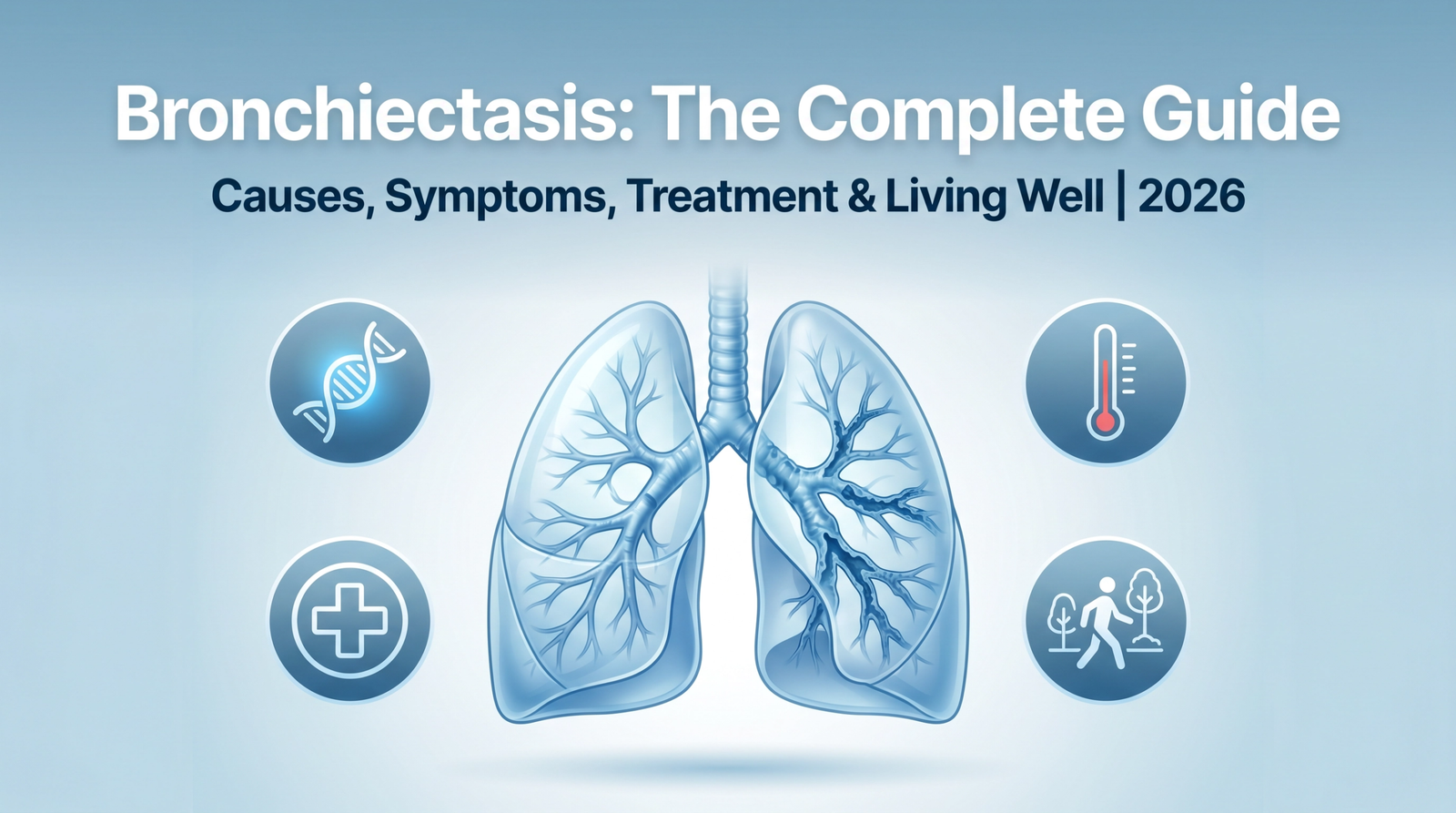
Bronchiectasis is a chronic respiratory condition characterized by permanent, abnormal widening and damage to the bronchi — the large airways that carry air into the lungs. This irreversible structural change disrupts the lung’s natural defense mechanisms, leading to mucus accumulation, recurrent infections, and a progressive cycle of airway injury that can significantly impair quality of life and respiratory function over time.
📑 Navigate This Guide
What Is Bronchiectasis?
Bronchiectasis is a chronic pulmonary disorder defined by permanent, irreversible dilation and destruction of the bronchial walls. The term derives from the Greek: bronkhia (windpipe) and ektasis (dilation). Under healthy conditions, the mucociliary escalator clears mucus efficiently. In bronchiectasis, damaged cilia lose their coordinated beat, excessive mucus is produced, and structural distortion creates pockets where secretions pool and stagnate.
Bronchiectasis Symptoms: What to Watch For
Chronic Productive Cough
A daily cough that produces sputum is present in over 90% of patients. Typically worse in the morning upon waking. Sputum volume ranges from 10 mL daily to over 200 mL in severe disease.
Recurrent Chest Infections
Patients experience frequent exacerbations defined by increased sputum volume/purulence, worsening cough, increased breathlessness, or fever. Some endure 4-6 exacerbations annually.
Shortness of Breath and Wheezing
Progressive breathlessness develops as lung function deteriorates. Wheezing and crackles are common, reflecting turbulent airflow through mucus-filled airways.
What Causes Bronchiectasis?
| Cause Category | Specific Conditions | Frequency |
|---|---|---|
| Post-infectious | Severe pneumonia, pertussis, measles, TB, aspiration | 20-40% |
| Cystic fibrosis | CFTR gene mutations | 5-10% |
| Immunodeficiency | CVID, IgA deficiency, HIV | 5-10% |
| ABPA | Hypersensitivity to Aspergillus | 1-5% |
| Idiopathic | No identifiable cause | 30-50% |
Types of Bronchiectasis
Cylindrical Bronchiectasis
Uniformly dilated airways with straight walls. Most common and mildest form. May be reversible if underlying cause treated early.
Varicose Bronchiectasis
Irregular, beaded dilation resembling varicose veins. Associated with higher bacterial load and more frequent exacerbations.
Cystic (Saccular) Bronchiectasis
Large, cyst-like ballooned dilations. Associated with highest sputum volumes, most frequent infections, and poorest prognosis.
How Bronchiectasis Is Diagnosed
High-resolution CT (HRCT) of the chest is the gold standard diagnostic test, with sensitivity and specificity exceeding 95%. Diagnostic criteria include: bronchial lumen diameter larger than accompanying pulmonary artery; failure of bronchi to taper toward the periphery; and visualization of bronchi within 1 cm of the pleural surface. Sputum microbiology identifies colonizing organisms. Pulmonary function testing demonstrates obstructive pattern (reduced FEV1/FVC ratio).
🫁 Get Expert Bronchiectasis Resources
Access comprehensive bronchiectasis management programs, airway clearance training videos, and personalized care planning tools.
Ad Explore Bronchiectasis Care Programs →Bronchiectasis Treatment: A Comprehensive Approach
- Airway clearance: Daily physical techniques to mobilize mucus — foundation of all bronchiectasis care
- Infection management: Prompt antibiotic treatment of exacerbations and long-term prophylaxis
- Treating underlying causes: Addressing root condition driving bronchiectasis
- Preventing complications: Vaccination, nutritional optimization, pulmonary rehabilitation
Airway Clearance Techniques: The Cornerstone of Care
Daily airway clearance is the single most important intervention in bronchiectasis management. Consistent, twice-daily clearance reduces sputum retention, lowers bacterial load, decreases exacerbation frequency, and preserves lung function.
Active Cycle of Breathing Technique (ACBT)
Three-phase technique: breathing control (relaxed nasal breathing), thoracic expansion (deep breaths with 3-second hold), and huffing (forceful exhalation with open mouth). Requires no equipment.
Oscillating Positive Expiratory Pressure (OPEP) Devices
Devices like Acapella, Aerobika combine positive expiratory pressure with airway oscillations to vibrate airways and reduce mucus viscosity. Portable and easy to use.
🫁 Personalized Airway Clearance Routine Builder
Antibiotic Therapy in Bronchiectasis
For patients with three or more exacerbations per year, long-term macrolide antibiotics (azithromycin 250-500 mg three times weekly) reduce exacerbation frequency by 40-60%. Before starting macrolides, require ECG, audiometry, liver function tests, and sputum culture to exclude NTM. For chronic Pseudomonas aeruginosa infection, inhaled antibiotics (tobramycin, colistin) deliver high drug concentrations directly to airways. Brensocatib (Brinsupri) is a novel DPP1 inhibitor reducing exacerbations in patients with ≥2 exacerbations/year despite standard treatment.
Managing Bronchiectasis Exacerbations
Exacerbations are diagnosed when at least three criteria are met: increased sputum volume, increased sputum purulence, worsening cough, increased breathlessness, fever, hemoptysis, or deterioration in exercise tolerance. Many clinicians provide a “rescue pack” of antibiotics for patients to start at first sign of exacerbation. Prevention strategies: daily airway clearance, smoking cessation, vaccination, long-term antibiotics for frequent exacerbators.
Living Well With Bronchiectasis
Regular exercise improves mucus clearance and strengthens respiratory muscles. A high-protein, anti-inflammatory diet and adequate hydration (≥2L daily) are essential. Many people with bronchiectasis continue working full-time with accommodations. Seek support from pulmonary rehabilitation programs and patient support groups.
🏆 Editor’s Choice: Top Bronchiectasis Management Resources Sponsored
| Rank | Resource | Rating | |
|---|---|---|---|
| #1 Top Pick | Complete Bronchiectasis Care Program Airway clearance training, exacerbation management | 4.9/5 | Ad Learn More → |
| #2 | Lung Health & Airway Clearance System | 4.8/5 | Ad Learn More → |
Sponsored content. We may earn commissions on purchases at no cost to you.
🎯 Bronchiectasis Symptom Assessment Quiz
📊 Bronchiectasis Exacerbation Risk Calculator
Frequently Asked Questions
No. Bronchitis is inflammation of the bronchi (usually reversible). Bronchiectasis involves permanent structural damage and abnormal widening of the airways visible on CT imaging.
The structural damage is permanent and irreversible. However, with consistent daily airway clearance and appropriate antibiotics, most patients experience substantial symptom improvement and stabilization of lung function.
Ad Explore comprehensive management programs →Guidelines recommend at least once daily for all patients, with twice daily recommended for moderate to severe disease, copious sputum, or frequent exacerbations.
📚 References & Sources
- Polverino E, et al. European Respiratory Society guidelines for management of adult bronchiectasis. ERJ, 2017.
- Hill AT, et al. British Thoracic Society Guideline for bronchiectasis in adults. Thorax, 2019.
- Chalmers JD, et al. Phase 2 trial of brensocatib in bronchiectasis (WILLOW). N Engl J Med, 2020.
- Altenburg J, et al. Azithromycin maintenance in non-CF bronchiectasis (BAT). JAMA, 2013.
Leave a Reply