Quick Answer
The relationship between sleep quality and lung function is powerfully bidirectional: poor sleep worsens daytime respiratory symptoms through inflammatory, autonomic, and mechanical mechanisms, while improved sleep produces measurable enhancements in lung function metrics including FEV1, peak expiratory flow, exercise tolerance, and bronchodilator responsiveness. Studies demonstrate that treating obstructive sleep apnea in COPD patients reduces exacerbation frequency by up to 40%, and that CPAP adherence correlates with slower decline in lung function over time. For patients seeking natural optimization, structured breathwork programs that improve sleep architecture simultaneously strengthen respiratory muscles, reduce airway inflammation, and restore parasympathetic balance, creating a virtuous cycle where each night of better breathing produces better daytime lungs, and better daytime lungs enable better nighttime breathing. Programs like Click here to learn more about BreatheAndSleep.org → are designed to initiate and sustain this positive feedback loop.
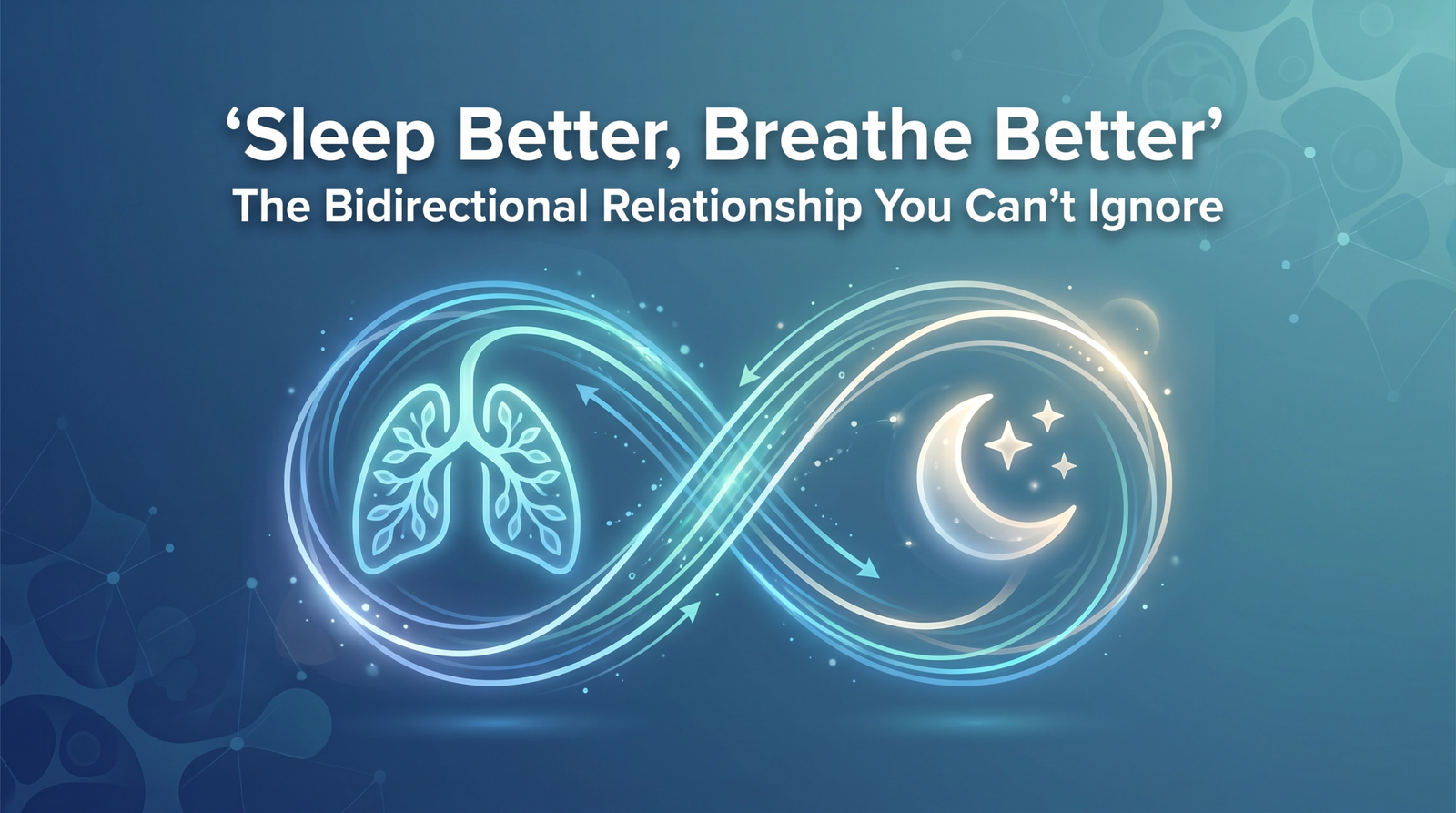
Sleep Better, Breathe Better: The Bidirectional Relationship You Can’t Ignore
Dr. Sarah Chen, a pulmonologist at a tertiary care center, noticed something puzzling in her clinic. Patients who had recently resolved their sleep apnea, whether through CPAP, weight loss, or other interventions, were reporting not just better energy and clearer thinking, but objectively easier breathing during the day. Their walk distances had improved. Their rescue inhaler use had decreased. Some even showed modest improvements in spirometry.
At first, she assumed this was a reporting bias, patients feeling better overall and therefore perceiving less dyspnea. But the pattern was too consistent, the improvements too specific. She began systematically tracking lung function metrics in her OSA patients before and after treatment, and the results surprised even her: treating sleep apnea was producing measurable improvements in daytime lung function that exceeded what could be explained by placebo or mood effects.
What Dr. Chen had stumbled upon was the bidirectional nature of the sleep-breathing relationship, a phenomenon that is transforming how respiratory specialists think about disease management. Sleep quality and lung function do not merely coexist; they actively shape each other, for better and for worse.
The Two-Way Street: How Sleep Shapes Lung Function
The traditional model treats sleep problems as a consequence of lung disease: you have COPD, therefore you sleep poorly. This is true but incomplete. The complete picture reveals that sleep quality is also a cause of lung disease progression: you sleep poorly, therefore your COPD worsens.
Better Sleep → Reduced Inflammation → Improved Airway Function → Better Breathing
⬇ ⬆
Better Breathing → Reduced Dyspnea → Less Anxiety → Better Sleep
This bidirectional relationship operates through several well-characterized mechanisms:
Immune Function and Inflammation
Sleep, particularly deep slow-wave sleep, is when the immune system performs much of its maintenance work. Cytokine production follows a circadian rhythm, with pro-inflammatory markers normally peaking during nighttime hours and being counterbalanced by anti-inflammatory processes during healthy sleep.
When sleep is fragmented or insufficient, this inflammatory regulation fails. Elevated circulating levels of tumor necrosis factor-alpha, interleukin-6, and C-reactive protein persist into daytime hours, directly increasing airway inflammation and bronchial hyperreactivity.
For COPD patients, this means that a night of poor sleep produces measurably more inflamed, more reactive airways the following morning. The effect is cumulative: chronic sleep disruption creates a sustained pro-inflammatory state that accelerates disease progression.
Autonomic Nervous System Balance
Healthy sleep restores parasympathetic dominance, giving the sympathetic nervous system a much-needed rest. This autonomic shift reduces heart rate, blood pressure, and airway smooth muscle tone. Inflammatory markers decrease. Bronchodilation occurs naturally.
OSA and other forms of sleep-disordered breathing prevent this autonomic restoration. Each apneic event triggers a sympathetic surge. By morning, the patient has endured hours of low-grade fight-or-flight activation. Airways are constricted. Mucus production is increased. Beta-2 receptors are downregulated, reducing bronchodilator responsiveness.
The result is a patient who wakes with airways that are functionally more diseased than they were the night before, not from disease progression but from the physiological consequences of disrupted sleep.
Respiratory Muscle Recovery
Skeletal muscles, including the diaphragm and intercostals, recover and strengthen during sleep. Growth hormone peaks during deep sleep, promoting tissue repair. Protein synthesis exceeds breakdown. Glycogen stores are replenished.
When deep sleep is fragmented by nocturnal hypoxemia or apneic events, this recovery is impaired. Respiratory muscles that should be refreshed by morning instead carry residual fatigue into the day. The work of breathing increases. Dyspnea worsens. Exercise tolerance decreases.
Cognitive and Behavioral Mediators
Sleep deprivation impairs executive function, reducing a patient’s ability to adhere to complex medication regimens. It increases pain and dyspnea perception, making the same degree of airflow obstruction feel more distressing. It promotes low mood and catastrophizing, which independently increase breathlessness through central mechanisms.
These cognitive and behavioral effects create a secondary pathway through which poor sleep worsens respiratory outcomes. Even if airway inflammation and autonomic balance were unchanged, the behavioral consequences of sleep deprivation would still impair disease management.
The Evidence: Quantifying Sleep’s Impact on Lung Function Metrics
The bidirectional relationship is not merely theoretical. Clinical studies have documented measurable effects of sleep quality on objective lung function parameters:
Exacerbation Frequency
Treating OSA with CPAP in COPD patients reduces acute exacerbation frequency by 30-40% compared to untreated overlap syndrome.
FEV1 Decline
Longitudinal cohort studies demonstrate faster FEV1 decline in COPD patients with untreated sleep-disordered breathing compared to those with normal sleep, even after adjusting for smoking, age, and baseline disease severity.
Morning Peak Expiratory Flow
COPD patients with nocturnal desaturation show consistent morning dipping of peak expiratory flow that improves with nocturnal oxygen supplementation or OSA treatment, indicating a reversible sleep-related component to airway obstruction.
Exercise Tolerance
Six-minute walk distance improves significantly in COPD patients after CPAP initiation for coexisting OSA, with gains averaging 30-50 meters, exceeding the minimal clinically important difference of 26 meters.
Bronchodilator Responsiveness
Post-bronchodilator FEV1 improvement is greater following nights of normal sleep compared to sleep-deprived nights, suggesting that sleep quality modulates airway smooth muscle responsiveness to beta-agonist therapy.
The Virtuous Cycle: How Improving Sleep Initiates Lung Recovery
Understanding the bidirectional relationship reveals an extraordinary therapeutic opportunity. If poor sleep worsens lung function, then improving sleep should improve lung function. And it does.
The clinical trials of CPAP in overlap syndrome patients provide the clearest evidence. When OSA is effectively treated, COPD patients experience:
- Reduced systemic inflammatory markers within weeks of treatment initiation
- Improved nocturnal oxygenation that reduces oxidative stress on lung tissue
- Restored autonomic balance with reduced sympathetic-mediated airway constriction
- Enhanced respiratory muscle recovery during uninterrupted deep sleep
- Better cognitive function supporting improved self-management behaviors
- Reduced right heart strain from nocturnal pulmonary hypertension
These benefits accrue over time. Short-term studies show improvements in quality of life and symptoms. Longer-term observational data suggest reduced mortality and slowed lung function decline in treated versus untreated patients. Sleep treatment becomes lung treatment.
For patients without OSA who nonetheless suffer from insomnia related to their respiratory condition, the same principles apply. Any intervention that improves sleep architecture, duration, and efficiency sets in motion the same beneficial physiological cascade. This is where structured breathwork programs acquire their particular value for respiratory patients.
The Respiratory Connection
At Respiratory Friends Centre, we champion an integrated model of respiratory care that treats sleep as a therapeutic target, not merely a quality-of-life concern. The evidence is clear: every night of quality sleep is an investment in your lung health. Every night of disrupted sleep is a withdrawal. Our resources are designed to help you maximize the deposits and minimize the withdrawals.
Breathwork as the Bridge: Simultaneously Improving Both Sides of the Equation
Structured breathwork programs occupy a unique therapeutic niche because they simultaneously address both directions of the bidirectional relationship. They improve sleep directly through autonomic rebalancing, anxiety reduction, and respiratory muscle strengthening. And they improve daytime lung function directly through the same mechanisms.
This dual action creates a self-reinforcing virtuous cycle:
- Breathwork practice improves sleep quality through parasympathetic activation and reduced nocturnal arousals
- Improved sleep reduces airway inflammation and restores bronchodilator responsiveness
- Reduced airway obstruction and improved respiratory muscle function decrease daytime dyspnea
- Reduced dyspnea lowers anxiety about breathing and bedtime
- Lower anxiety further improves sleep, completing and strengthening the cycle
Each iteration of this cycle produces incremental improvement. Patients who begin breathwork programs often report initial benefits in sleep quality within 2-3 weeks, followed by gradual emergence of daytime respiratory improvements over 6-12 weeks. The trajectory is upward, with benefits compounding over time rather than diminishing.
Programs like Click here to learn more about BreatheAndSleep.org → are specifically designed to initiate this virtuous cycle, with protocols that target the precise mechanisms linking sleep disruption to lung dysfunction.
Practical Strategies for Optimizing the Sleep-Lung Feedback Loop
Beyond formal breathwork programs, several evidence-based strategies can strengthen the virtuous cycle:
Track Both Sleep and Lung Metrics
Most patients track either sleep or respiratory symptoms, but rarely both. Simultaneous tracking reveals the connections between them. Record morning peak flow, daytime energy, rescue inhaler use, and sleep quality on the same diary. Look for patterns: poor sleep nights predict worse morning peak flow; good sleep nights predict better exercise tolerance. This data becomes powerfully motivating.
Time Your Interventions Strategically
Some interventions have immediate effects (rescue inhaler), some have daily effects (long-acting bronchodilators), and some have cumulative effects (breathwork training). Understanding these timeframes prevents discouragement. You wouldn’t expect an antibiotic to work in an hour; don’t expect breathing exercises to transform sleep in a day. Give cumulative interventions their required time to manifest benefits.
Protect Sleep as Aggressively as You Protect Your Lungs
If you avoid smoke, pollutants, and respiratory infections to protect your lungs, apply the same vigilance to sleep. Protect your sleep schedule, sleep environment, and pre-sleep routine with the same discipline you apply to medication adherence. Treat sleep as a medical intervention because it is one.
Address Comorbidities That Disrupt Both Systems
Gastroesophageal reflux disease, congestive heart failure, anxiety disorders, and chronic pain each disrupt both sleep and breathing. Treating these conditions produces amplified benefits across both domains. A patient whose reflux is controlled, whose heart failure is optimized, and whose anxiety is managed has removed multiple barriers to both sleep and respiratory health.
Maintain Consistency Even During Improvement
A common error is to relax sleep-protective behaviors once improvement begins. This undermines the very cycle that produced the improvement. The goal is not to fix sleep and then return to old habits; it is to establish sustainable patterns that perpetuate the virtuous cycle indefinitely.
Start Your Virtuous Cycle Today
Better sleep means better lungs. Better lungs mean better sleep. Discover the breathwork program designed to get both sides of this equation working in your favor.
Click here to learn more about BreatheAndSleep.org →Pros and Cons: Optimizing the Bidirectional Sleep-Lung Relationship
Benefits of the Integrated Approach
- Every sleep improvement directly benefits daytime lung function
- Creates self-reinforcing virtuous cycle rather than temporary fix
- Addresses root mechanisms rather than masking symptoms
- Produces cumulative benefits that strengthen over time
- Reduces need for rescue medication and urgent care visits
- Improves quality of life beyond respiratory outcomes
- Empowers patient with active self-management strategy
- Cost-effective compared to repeated medical interventions
Realistic Considerations
- Benefits emerge gradually over weeks, not immediately
- Requires consistent practice during initial establishment phase
- Comorbidities may need independent treatment
- Severe OSA may require CPAP in addition to breathwork
- Not a substitute for prescribed respiratory medications
- Disease progression may require periodic protocol adjustment
Frequently Asked Questions
How much sleep do I actually need for optimal lung function?
Most adults require 7-9 hours of sleep for optimal health, and respiratory patients may benefit from the higher end of this range to allow adequate time for respiratory muscle recovery and inflammatory regulation. However, sleep quality matters as much as quantity. Six hours of uninterrupted deep sleep may be more restorative than nine hours of fragmented, arousal-punctuated sleep. Focus on both adequate duration and good sleep efficiency (time asleep divided by time in bed, with 85% or higher considered normal).
Can improving my sleep actually slow my COPD progression?
While sleep optimization cannot reverse established structural damage (emphysema, airway remodeling), evidence strongly suggests it can slow the rate of functional decline. By reducing exacerbation frequency, minimizing inflammatory damage, preserving respiratory muscle function, and improving medication adherence, good sleep creates conditions that favor disease stability over accelerated decline. Think of it as removing a major accelerator of disease progression rather than a cure.
What is the single most important thing I can do to improve both sleep and breathing?
If you have documented OSA, use your CPAP consistently. Nothing else comes close to the magnitude of benefit that CPAP provides for overlap syndrome patients. If you do not have OSA, the highest-yield intervention is establishing a consistent pre-sleep breathwork routine that includes diaphragmatic breathing, extended exhalation, and resonant breathing. This single practice simultaneously addresses the autonomic, mechanical, and anxiety-related barriers to both sleep and breathing.
Why do I sometimes feel more breathless after a long sleep?
Extended time in the supine position can worsen dynamic hyperinflation in COPD patients, and sleep itself reduces respiratory drive. If you sleep significantly longer than usual, you may spend more time in positions and at lung volumes that increase air trapping. Additionally, REM periods cluster in the latter portion of the night, so longer sleep may include more REM-related respiratory muscle atonia. Try gradually changing position during the night if possible, and ensure adequate head-of-bed elevation.
Does the season affect the sleep-breathing relationship?
Yes, seasonally. Winter months bring increased respiratory infections, cold air-induced bronchospasm, and indoor allergen exposure that can worsen both lung function and sleep. Shorter daylight hours disrupt circadian rhythms. Conversely, summer heat and humidity may increase dyspnea and impair sleep quality. Tracking your personal seasonal patterns allows anticipatory adjustment of your management plan, increasing bronchodilator coverage or intensifying breathwork practice during your most challenging seasons.
Can naps help compensate for poor nighttime sleep?
Strategic napping (20-30 minutes, early afternoon) can improve alertness and mood without significantly disrupting nighttime sleep architecture. However, naps do not provide the deep slow-wave and REM sleep that drive the inflammatory regulation and respiratory muscle recovery that occur during consolidated nighttime sleep. Think of naps as a temporary bridge, not a replacement for fixing nighttime sleep. If you find yourself needing long daily naps, this is a signal that your nighttime sleep requires attention.
How can I tell if my breathwork is actually improving my sleep objectively?
Subjective measures including sleep diaries, perceived sleep quality ratings, and daytime energy scores provide valuable information. For more objective data, consumer sleep trackers can estimate sleep stages and disruptions with reasonable accuracy, though they are not medical devices. The most meaningful metrics for respiratory patients are the downstream consequences: morning peak flow trends, rescue inhaler use frequency, exercise tolerance, and exacerbation frequency. Improvement in these metrics, occurring in parallel with perceived sleep improvement, strongly suggests genuine physiological benefit.
Should I be concerned about “central sleep apnea” in COPD?
Central sleep apnea (CSA), where breathing effort ceases without upper airway obstruction, can occur in COPD patients, particularly those with hypercapnia and in those using supplemental oxygen. CSA is distinct from OSA and requires different management. If you have persistent sleep symptoms despite OSA treatment, or if you experience paradoxical worsening of sleep on CPAP, discuss central sleep apnea evaluation with your sleep medicine specialist. Some breathing exercises that strengthen respiratory drive may be beneficial, but CSA generally requires specialized medical management.
Key Takeaways
- The sleep-lung relationship is bidirectional: poor sleep worsens lung function, and improving sleep improves lung function
- Mechanisms include inflammatory dysregulation, autonomic imbalance, respiratory muscle fatigue, and behavioral impairment
- Treating OSA in COPD reduces exacerbations by 30-40% and improves multiple objective lung function metrics
- Structured breathwork uniquely addresses both sides of the equation simultaneously, creating a virtuous cycle
- Sleep should be treated as a therapeutic target as important as any medication in your respiratory regimen
- Programs like Click here to learn more about BreatheAndSleep.org → provide protocols to initiate and sustain the sleep-lung virtuous cycle
- Consistency and patience are essential; benefits compound over weeks and months
Leave a Reply