Why Your Inhaler Isn't Enough: What Pulmonologists Don't Tell You About Lung Maintenance
Quick Answer
Inhalers and pharmaceutical treatments address the pathophysiology of chronic lung disease at the molecular level, opening airways and reducing inflammation, but they cannot strengthen respiratory muscles, retrain inefficient breathing patterns, clear accumulated mucus, or reverse the deconditioning that makes daily activities feel impossible. This is the “inhaler gap” — the vast middle ground between controlled inflammation and actual functional recovery. Comprehensive lung maintenance bridges this gap through four evidence-based pillars: systematic airway clearance, respiratory muscle strengthening, breathing pattern optimization, and integrated exercise conditioning. Click here to learn more about Lung Reborn →
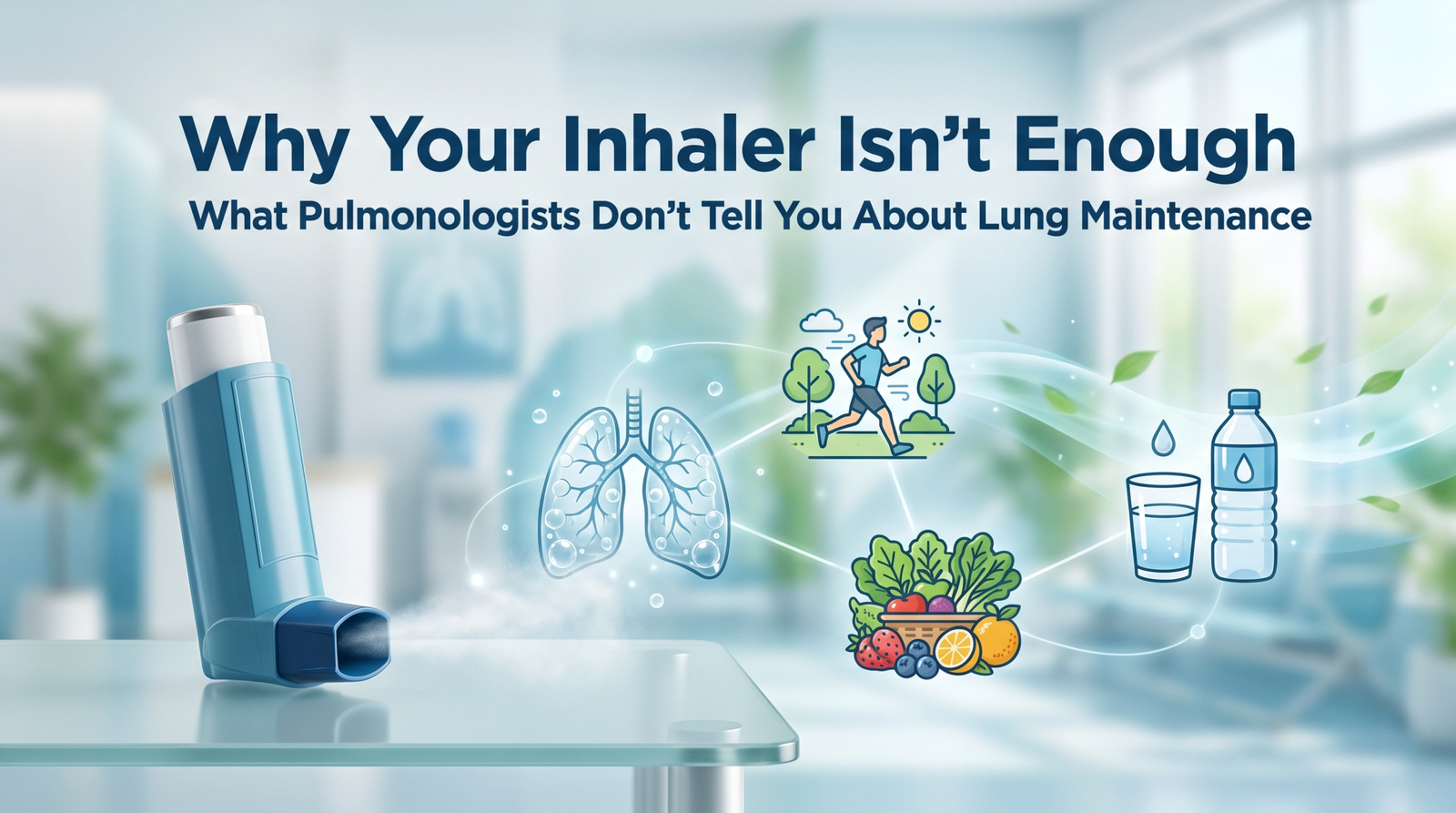
Why Your Inhaler Isn’t Enough: What Pulmonologists Don’t Tell You About Lung Maintenance
Every three months, like clockwork, Margaret would sit in her pulmonologist’s exam room and report the same thing: she was using her inhalers exactly as prescribed, her exacerbation frequency hadn’t changed, and she still couldn’t walk to her mailbox without stopping to catch her breath. Each visit ended the same way: a slightly different inhaler combination, a brief encouragement to “stay active,” and an appointment card for the next quarter.
What Margaret never heard, what her specialist never said, was that her inhalers were doing everything they could do and it was never going to be enough. The bronchodilators opened her airways beautifully, and the inhaled corticosteroid reduced her inflammation effectively. But Margaret’s problem wasn’t just narrowed airways. It was weakened respiratory muscles, chronically trapped air, mucus that never fully cleared, and a body so deconditioned that the simple act of walking had become an overwhelming challenge.
Her pulmonologist, trained in pharmacotherapy and acute disease management, treated what medications could treat. The rest, Margaret assumed, was simply her disease. She was wrong. There was an entire universe of interventions between her inhalers and her disability that no one had ever mentioned.
The Inhaler Gap: Understanding What Medications Cannot Do
Modern respiratory pharmacology is genuinely impressive. Long-acting beta-agonists and antimuscarinics provide 12-24 hours of bronchodilation. Inhaled corticosteroids suppress airway inflammation. Triple combination therapies now available can produce significant improvements in lung function and reduction in exacerbation frequency. These medications save lives and reduce hospitalizations.
But medications, by their nature, are limited. An inhaler can relax airway smooth muscle, but it cannot strengthen the diaphragm. A corticosteroid can reduce neutrophilic infiltration, but it cannot retrain a rapid, shallow breathing pattern. A bronchodilator can widen airways, but it cannot clear the mucus plugging that perpetuates infection and inflammation.
This gap between pharmacological disease modification and functional restoration is not a minor oversight. It is the primary determinant of quality of life for most chronic lung disease patients. A patient with moderately severe COPD but well-preserved muscle function, efficient breathing patterns, and good conditioning can function dramatically better than a patient with milder obstruction but severe deconditioning and poor respiratory mechanics.
The Critical Gap in Respiratory Care
Inhalers control disease. They do not restore function. Between “controlled disease” and “restored function” lies a vast territory of airway clearance, muscle training, breathing reeducation, exercise conditioning, and lifestyle optimization that the average respiratory patient never explores. Bridging this gap is the single most impactful intervention available for improving quality of life in chronic lung disease.
Why the Gap Exists: Systemic Failures in Respiratory Care
If functional rehabilitation is so important, why do so few patients receive it? The reasons are systemic and multifaceted:
Time constraints in clinical practice: A pulmonologist managing a panel of 2,000 patients with 15-minute appointment slots cannot possibly teach airway clearance techniques, supervise exercise programs, and provide lifestyle counseling during routine follow-up visits. The system is designed for medication management, not rehabilitation delivery.
Reimbursement misalignment: In many healthcare systems, pulmonary rehabilitation is underfunded and under-reimbursed compared to pharmacological interventions and acute care. A hospitalization for exacerbation generates substantial revenue; a preventive rehabilitation program does not.
Access limitations: Formal pulmonary rehabilitation programs, while the gold standard, are available to only a small fraction of eligible patients. Geographic barriers, transportation challenges, cost, and program availability limit access, particularly in rural and underserved areas.
The medical model bias: Medical training emphasizes disease treatment over functional optimization. Physicians are trained to think in terms of diagnoses and prescriptions, not in terms of movement patterns, breathing mechanics, and mucus clearance techniques. This is not a criticism of individual physicians; it is a limitation of the training they receive.
Patient assumptions: Many patients, like Margaret, assume that their inhalers represent the sum total of available treatment. They don’t know to ask about rehabilitation because they don’t know it exists. The result is a passive acceptance of disability that is neither necessary nor inevitable.
Pillar 1: Systematic Airway Clearance — Beyond the Cough
The first pillar of comprehensive lung maintenance addresses the mucus hypersecretion and impaired clearance that characterize chronic bronchitis and many forms of COPD. This is not simply “coughing more.” It is a systematic approach to mobilizing and expectorating mucus using evidence-based techniques.
Huff coughing (forced expiratory technique): Unlike uncontrolled coughing, which exhausts patients and can trigger bronchospasm, huff coughing uses controlled, mid-lung-volume expirations to move mucus from peripheral to central airways for clearance. When performed correctly, it clears mucus efficiently without the fatigue and bronchospasm associated with forceful coughing.
Oscillating positive expiratory pressure (OPEP) devices: Devices like the Aerobika or Acapella create vibrations during exhalation that loosen mucus from airway walls while providing positive pressure that prevents airway collapse. Studies demonstrate improved mucus clearance and reduced exacerbation frequency with regular use.
Postural drainage: Using gravity to assist mucus clearance from specific lung segments. Different positions drain different areas: lying on your left side drains the right lung; lying on your right side drains the left; head-down positions drain upper lobes. A respiratory therapist can teach you the specific positions most relevant to your disease distribution.
Autogenic drainage: A three-phase breathing technique that uses varying lung volumes to sequentially mobilize mucus from small, medium, and large airways. It requires instruction but is highly effective once mastered, particularly for patients who cannot tolerate physical percussion.
For patients without access to formal pulmonary rehabilitation, structured home programs that teach these techniques step-by-step can bridge the gap. Click here to learn more about Lung Reborn →
Pillar 2: Respiratory Muscle Strengthening — The Neglected Muscles
The diaphragm is a muscle. Like any muscle, it weakens with disuse and strengthens with training. Yet most respiratory patients receive no muscle training at all.
In COPD, the diaphragm becomes mechanically disadvantaged due to hyperinflation. The muscle flattens and shortens, reducing its ability to generate force. Simultaneously, chronic breathlessness leads to activity avoidance, producing generalized deconditioning that includes the respiratory muscles. The result is a muscle attempting to do more work with less mechanical advantage and less strength.
Inspiratory muscle training (IMT): Using a handheld device that provides adjustable resistance to inspiration, patients perform daily training sessions that progressively load the inspiratory muscles. Meta-analyses consistently demonstrate that IMT reduces dyspnea, improves exercise tolerance, and enhances quality of life in COPD. The benefits are dose-dependent: more intensive training produces greater results.
Diaphragmatic breathing training: Conscious retraining to shift breathing from accessory muscles (scalenes, sternocleidomastoid, intercostals) back to the diaphragm. This reduces the work of breathing, improves ventilation-perfusion matching, and decreases the sensation of dyspnea. With consistent practice, diaphragmatic breathing can become the default pattern.
Load-bearing activities: Upper body resistance training (light weights, resistance bands, rowing) specifically loads the accessory respiratory muscles, improving their strength and endurance for situations requiring increased ventilation.
Pillar 3: Breathing Pattern Optimization — Efficiency as Medicine
How you breathe matters as much as what medications you take. Suboptimal breathing patterns are ubiquitous in chronic lung disease and contribute disproportionately to symptoms.
Rapid, shallow breathing: Many COPD patients develop a pattern of rapid, shallow breaths that minimize the work of each individual breath but produce dynamic hyperinflation, increased dead space ventilation, and a persistent sensation of air hunger. This pattern feels “safer” because each breath requires less effort, but it perpetuates the very dyspnea it attempts to avoid.
Pursed-lip breathing: Exhaling through pursed lips creates back-pressure that splints small airways open, reducing dynamic hyperinflation and improving gas exchange. The 2:1 ratio (exhale twice as long as inhale) is particularly effective for reducing trapped air. This technique should be practiced until it becomes automatic during exertion and at rest.
Slow breathing with prolonged expiration: Consciously reducing respiratory rate to 10-12 breaths per minute with extended expiratory phases reduces air trapping, improves oxygenation, and activates the parasympathetic nervous system, reducing anxiety and breathlessness perception.
Coordinated breathing with activity: Learning to synchronize breathing with movement: inhaling during preparation phases, exhaling during exertion. This simple coordination reduces breathlessness during daily activities and exercise.
Pillar 4: Integrated Exercise Conditioning — The Non-Negotiable Foundation
Exercise is not optional for lung maintenance. It is as essential as any medication, and in some respects more impactful for quality of life outcomes.
Why exercise matters: Exercise conditions the cardiovascular system, reducing the cardiac demands of any given activity. It strengthens skeletal muscles, improving the efficiency of oxygen utilization. It reduces systemic inflammation. It improves respiratory muscle endurance. It prevents osteoporosis, which is common in COPD patients due to corticosteroid use and inactivity. It reduces anxiety and depression. No medication produces this breadth of benefit.
The walking foundation: Walking is the most accessible, sustainable, and well-tolerated exercise for respiratory patients. The goal is progressive: starting at whatever distance is currently comfortable (even 2-3 minutes) and gradually increasing duration and pace. Interval walking (alternating comfortable and slightly faster paces) provides excellent cardiovascular stimulus while allowing recovery periods.
Upper body training: Arms and shoulders are often neglected but critically important for respiratory patients, who use upper body muscles for breathing support during exertion. Light resistance training for arms, shoulders, and back reduces dyspnea during activities involving arm elevation (dressing, reaching, carrying).
Balance and flexibility: Yoga and tai chi improve balance (reducing fall risk), flexibility (improving chest wall mobility and ventilation), breathing coordination, and anxiety. Several studies demonstrate specific benefits for COPD patients, including reduced dyspnea and improved quality of life.
Putting It Together: A Comprehensive Lung Maintenance Protocol
The four pillars integrate into a daily and weekly routine:
Daily Maintenance Toolkit
Morning: Airway clearance session (10-15 minutes). IMT (20-30 breaths at challenging resistance). Diaphragmatic breathing (5 minutes).
Mid-Day: Exercise Foundation
Walking: 20-40 minutes, 5-6 days per week, with progressive pacing. Upper body resistance training: 2-3 days per week.
Evening: Restoration
Breathwork: Pursed-lip breathing during evening relaxation. Resonant breathing (5-6 breaths per minute) for autonomic balance before bed.
Weekly: Assessment
Review: Peak flow trends, symptom diary, exercise tolerance. Adjust intensity and components based on progress.
This maintenance protocol, sustained over months and years, addresses the inhaler gap comprehensively. It does not replace medications; it transforms them from isolated interventions into components of a complete functional restoration program.
For patients seeking structured guidance in implementing this comprehensive approach, Click here to learn more about Lung Reborn →
Don’t Settle for Half Treatment
Your inhalers are important. But they’re only half the picture. Discover the comprehensive lung maintenance protocol that addresses everything your medications can’t touch.
Click here to learn more about Lung Reborn →Pros and Cons: Comprehensive Lung Maintenance
Benefits of the Four-Pillar Approach
- Addresses the major functional limitations that medications cannot
- Produces synergistic benefits when combined with pharmacotherapy
- Empowers patients with active self-management tools
- Reduces exacerbation frequency and hospitalization risk
- Improves quality of life beyond what FEV1 would predict
- Maintains and improves function even as disease progresses
- Reduces medication dependence for some patients
- Cost-effective compared to repeated acute care
Implementation Challenges
- Requires significant time commitment (30-60 minutes daily)
- Benefits accumulate gradually over weeks and months
- Some techniques require initial instruction
- Exercise may be challenging for severely limited patients
- Requires self-motivation and consistency
- Should not replace medical care or prescribed medications
The Respiratory Connection
Respiratory Friends Centre exists to illuminate the path that standard medical care often leaves in shadow. We are not critical of physicians who do their best within constrained systems. We are committed to ensuring that patients know the full range of options available to them. Your inhalers are a beginning, not an end. Comprehensive lung maintenance is not an alternative to medical care; it is the completion of it.
Frequently Asked Questions
Why didn’t my doctor tell me about these interventions?
Most physicians practice within systems that prioritize pharmacotherapy and acute care. Time constraints, reimbursement structures, and training emphasis mean that functional rehabilitation often receives inadequate attention. This is a systemic issue, not individual negligence. Increasingly, forward-thinking pulmonologists recognize these gaps and actively refer patients to pulmonary rehabilitation. If your physician hasn’t mentioned these approaches, ask directly about pulmonary rehab referral, airway clearance techniques, and inspiratory muscle training.
Can I do pulmonary rehabilitation at home?
Formal, supervised pulmonary rehabilitation is the gold standard and should be utilized when available. However, for patients without access, home-based programs based on the same principles can produce meaningful benefits. The key elements are: structured exercise (walking program with progressive intensity), breathing exercises (pursed-lip, diaphragmatic), airway clearance techniques, and self-monitoring. Programs like Lung Reborn provide the structure, instruction, and progression guidance that make home rehabilitation effective and safe.
Will lung maintenance reduce my need for inhalers?
Some patients do experience reduced medication requirements as their functional status improves, but this varies widely and should only be pursued under medical supervision. The goal of lung maintenance is not to eliminate medications but to optimize function within the constraints of your disease. Some patients continue all medications while experiencing dramatically improved quality of life through rehabilitation. Never discontinue or reduce prescribed medications without explicit physician approval.
How is this different from just “staying active”?
While staying active is beneficial, comprehensive lung maintenance is more structured and targeted. It includes specific techniques for airway clearance that general activity does not address. It incorporates respiratory muscle training that walking alone cannot provide. It teaches breathing pattern optimization that transforms how you breathe during both rest and exertion. “Staying active” is a vague recommendation; the four-pillar approach is a comprehensive, evidence-based system.
Is it too late to start if I’ve had COPD for many years?
It is never too late. Studies demonstrate pulmonary rehabilitation benefits in patients with severe, long-standing COPD, including those on supplemental oxygen. The principle of reversibility applies at all severity levels: deconditioned muscles strengthen, inefficient breathing patterns improve, and accumulated mucus clears regardless of disease duration. The magnitude of improvement may be greater in less advanced disease, but meaningful gains are achievable at every stage.
How do I maintain motivation for a daily lung maintenance routine?
Several strategies help: Track objective metrics (peak flow, walking distance, rescue inhaler use) so you can see progress. Connect with support groups of others pursuing similar goals. Link your practice to meaningful life activities (“I want to walk my daughter down the aisle”). Use habit stacking (attach new habits to existing routines). Celebrate milestones. Remember that maintenance is easier than recovery; stopping and restarting is harder than maintaining consistent practice.
Can lung maintenance prevent exacerbations?
Yes, substantially. Pulmonary rehabilitation reduces exacerbation frequency and hospitalization risk by approximately 30-40%. The mechanisms include: improved mucus clearance reducing infection risk, better conditioning reducing cardiopulmonary stress, stronger respiratory muscles preventing respiratory failure during illness, and improved self-management enabling earlier intervention at the first sign of deterioration.
What if I can’t afford pulmonary rehabilitation?
Cost is a significant barrier. Options include: checking insurance coverage (many plans cover pulmonary rehab for COPD); asking about hospital-based programs that may offer sliding-scale fees; exploring telehealth rehabilitation programs; using structured home-based programs; and working with a physical therapist on a limited consultation basis to establish a home program. While formal programs offer advantages, the principles of lung maintenance can be implemented at minimal cost with proper guidance and self-motivation.
Key Takeaways
- Inhalers control disease but cannot restore function; a critical gap exists between pharmaceutical treatment and functional recovery
- Systemic failures in healthcare delivery leave most patients unaware of rehabilitation options
- Comprehensive lung maintenance requires four pillars: airway clearance, respiratory muscle training, breathing pattern optimization, and exercise conditioning
- These interventions produce benefits that medications alone cannot achieve, including improved exercise tolerance, reduced dyspnea, and fewer exacerbations
- Structured programs like Click here to learn more about Lung Reborn → provide the guidance and protocols needed to bridge the inhaler gap
- Lung maintenance is not an alternative to medical care but its essential completion
- It is never too late to begin; benefits are achievable at all disease stages
Leave a Reply