

Affiliate disclosure: This article contains an affiliate link. We may earn a commission if you purchase through it, at no extra cost to you.
Pacing housework: the short answer
Pacing housework when breathing feels hard starts with slowing down, planning smaller steps and building in rests before you need them. Spreading chores across the week, keeping frequently used items within easy reach and using simple breathing techniques can make everyday cleaning more manageable.
If housework leaves you short of breath, you are not alone. University College London Hospitals advises breaking activities into smaller chunks, building in rest, and sitting wherever possible. Small changes to how you approach chores can make a real difference to how comfortable you feel. If you are gasping or cannot get words out, stop reading and call 999.
This guide brings together practical, evidence-led strategies you can start using today. It is not a substitute for medical advice, so if breathlessness is new, worsening or worrying you, please speak to your GP or care team.
Key takeaways
- Slow down on purpose. Moving at a steadier pace and resting before you feel desperate can make activity feel easier.
- Break big jobs into small steps. One shelf, one room, one task at a time, with a proper rest in between.
- Use your energy wisely. Do the harder jobs when you feel at your best, and spread the rest across the day or week.
- Learn a breathing technique you can use anywhere. The NHS mentions breathing through pursed lips and paced breathing.
- Know when to seek help. Breathlessness that is sudden, severe or comes with other symptoms should never be ignored.
Why housework makes breathlessness worse
Housework is surprisingly demanding. It combines bending, lifting, reaching and carrying, often in warm rooms, and that all adds to the work your body has to do. Regular activity still matters, though. UCLH points out that activities such as walking, gardening or housework can help breathlessness over time, as long as you pace yourself.
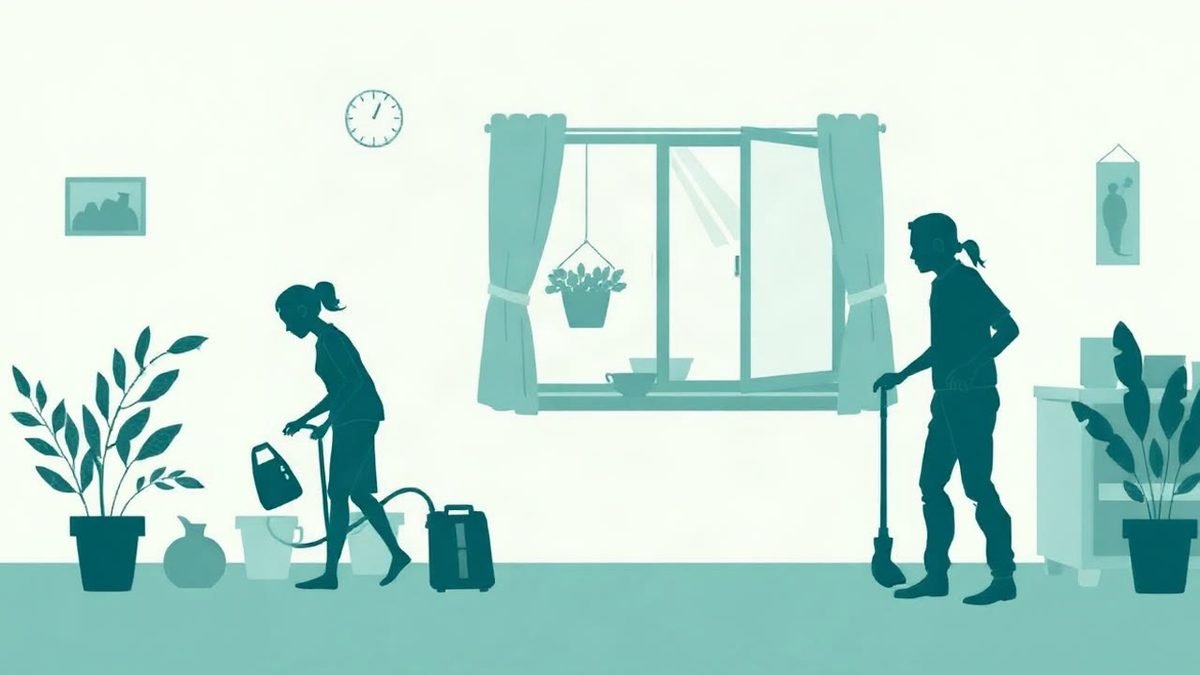
Bending over deserves a special mention. Avoid holding your breath, and try breathing out on the effort, which Cambridge University Hospitals calls “blow as you go”. If you regularly feel breathless when you bend, or when you lie down, mention it to your GP. The NHS says to see a GP if shortness of breath gets worse during your normal activities or when you lie down.
How do I pace housework so I don’t get too breathless?
Pacing means deliberately working below your limit rather than pushing to it. UCLH describes it as breaking activities into smaller chunks and building rest into them. Here is how to put that into practice with chores.
Break tasks into smaller steps
- Split a big job into stages: instead of “clean the kitchen”, try “wipe the worktops today, the floor tomorrow”.
- Pause and rest before you feel desperate, not after. Lower your shoulders and let your breathing settle before continuing.
- Set a timer if it helps, and stop when it rings, even if the job is not finished. It will still be there tomorrow.
Plan demanding tasks for your best time of day
Most people have a window in the day when they feel strongest. Plan the more demanding jobs for that time. If mornings are best for you, save vacuuming for then and leave gentler tasks, like dusting or folding laundry while seated, for the afternoon.
Put things within easy reach
Extra trips and repeated reaching use energy. Keep frequently used items, like cleaning sprays, laundry baskets and bin bags, within easy reach. A small caddy that carries everything you need for one room can save several journeys up and down the stairs.
Treat energy like a budget
Think of energy as a limited budget: prioritise the tasks that matter most and spread the rest across the day or week. Some questions worth asking before you start:
- Does this need doing today, or this week?
- Can I do it sitting down instead of standing?
- Could someone else do it, or could we do it together?
Breathing techniques to use while you work
Having a go-to breathing technique means you can steady yourself mid-task. Cambridge University Hospitals suggests practising little and often when you are not breathless, so it can become a habit.
Pursed-lip breathing
Breathe in gently through your nose, then breathe out slowly through pursed lips, as if whistling. Kent Community Health says this can help you recover your breath and control it during exertion. You can use it while walking to the washing line, while pushing the vacuum, and while resting afterwards.
If you would like to build a calmer breathing habit more generally, our guide to belly breathing lying down offers a gentle bedtime routine that some people find relaxing.
Resting positions that ease breathing
When you need to stop, the position you rest in matters. Kent Community Health describes standing relaxed and leaning forwards with your arms on a support, such as a kitchen worktop or window sill, or sitting and leaning forward with your arms resting on your thighs. UCLH notes that leaning forward is often helpful during everyday tasks.
Cool moving air
Cooling the skin around your cheeks, nose and mouth may ease breathlessness, according to Cambridge University Hospitals. You can open a window, or hold a small handheld fan about 15cm from your face.
Which household chores need adapting most?
Rather than avoiding chores altogether, most people find it easier to adapt how they do them.
Cleaning the bathroom
This is consistently the toughest chore because of the bending, kneeling and scrubbing involved. Consider using a long-handled brush or mop, spraying surfaces and letting the cleaner do the work before you wipe, and splitting the bathroom into several short sessions instead of one long one.
Vacuuming, sweeping and mopping
Pushing a vacuum uses your arms, shoulders and core continuously. Try lightweight equipment, small areas at a time, and a slow, steady pace matched to your breathing. Pursed-lip breathing while you push can help you keep a rhythm.
Laundry and dishes
Sit down for folding, sorting and washing up whenever possible. Use a trolley or a small basket rather than carrying heavy loads, and hang washing in easy stages rather than all at once.
Bending and reaching
Raise storage so everyday items sit at waist height rather than floor level or above your head. Long-handled grabbers, dustpans and sponges reduce how often you need to bend.
When is breathlessness during chores a sign to seek help?
Feeling more breathless when you push yourself is expected, but some changes need attention. The NHS sets out when to get help.
See a GP if your shortness of breath gets worse when you do your normal activities or when you lie down, or if you feel short of breath and have swollen ankles.
Call 999 or go to A&E if you have severe difficulty breathing, are gasping, choking or cannot get words out, your chest feels tight or heavy, you have pain that spreads to your arms, back, neck or jaw, your lips or skin are turning very pale, blue or grey, or you feel suddenly confused. Contact NHS 111 if you are more short of breath than usual, or you are coughing up blood. Our article on coughing up blood and when to get help urgently explains more, and our piece on pleurisy and other causes of pain when breathing in may help you understand other possible reasons.
Can anxiety make housework breathlessness worse?
It can. UCLH describes how feeling short of breath can make us anxious, which leads to feeling more breathless, creating a cycle. Learning one or two breathing techniques and resting in a supported position can help break that cycle. If anxiety about breathlessness is a regular feature of your life, raise it with your GP.
Should I keep doing chores at all, or just rest?
For most people with long-term breathlessness, the aim is to stay active in a paced, manageable way rather than to avoid activity altogether. UCLH notes that regular activity, including housework, can help your breathlessness, and advises pacing yourself and being as independent as you can. Follow any advice your own care team has given you.
That said, some days will be worse than others. On difficult days, it is perfectly reasonable to strip your list down to the essentials and let everything else wait.
Advertisement
Books and guides on breathing
Books, e-books and brochures from the Conscious Breathing Institute on breathing habits, sleep and stress.
Affiliate link: we may earn a commission if you buy, at no extra cost to you. We have not tested this product. It is general education, not a medical treatment, and it does not replace your inhalers, prescribed care or pulmonary rehabilitation. If you have a lung condition, check with your GP or respiratory team before changing how you breathe or exercise.
FAQ
How often should I rest while doing housework?
There is no single right answer, but a useful habit is to rest before you feel desperate: pause, lower your shoulders and let your breathing settle before continuing. Break demanding jobs like vacuuming or cleaning the bathroom into smaller steps with rests in between.
Why do I get breathless when I bend over?
It is a term for shortness of breath that happens when bending over. If you regularly get breathless when you bend, tell your GP or care team, who can check what is causing it.
Can a fan really help with breathlessness?
Many people find it does. Cambridge University Hospitals suggests a handheld fan about 15cm from your face, moved slowly from side to side, and says cooling the skin around the cheeks, nose and mouth may ease breathlessness.
What is the best breathing technique to use while cleaning?
Pursed-lip breathing is a good all-round option: breathe in gently through your nose, then breathe out slowly through pursed lips.
Should I get help with housework?
If breathlessness is stopping you keeping your home comfortable, ask for support. Family, friends and equipment that reduces effort can all help, and UCLH says to ask for support and help if you need it. Your GP or care team can point you towards local options, including whether a pulmonary rehabilitation course is right for you.
Final thoughts
Pacing housework when breathing feels hard is about working with your body, not against it: smaller steps, planned rests, items within reach and a breathing technique you trust. Start with just one change this week, perhaps breaking your hardest chore into two shorter sessions. If breathlessness is getting worse, talk to your GP or care team.
Sources
- NHS: Shortness of breath
- NHS: Living with COPD
- Cambridge University Hospitals NHS: Ten tips for managing breathlessness
- University College London Hospitals NHS: Breathlessness
- Kent Community Health NHS: Managing breathlessness
Editorial note: this is general health information, not medical advice. Our articles are written and checked against published guidance by our editorial team and are not reviewed by a clinician unless the article says so. If your care team has told you something different, follow their advice.
Leave a Reply