

Affiliate disclosure: This article contains an affiliate link. We may earn a commission if you purchase through it, at no extra cost to you.
Belly breathing lying down is one of the simplest bedtime routines a beginner can try: you rest on your back, place one hand on your chest and one on your belly, and let the belly gently rise as you breathe in and fall as you breathe out, while your upper chest stays mostly still. Practised for a few gentle minutes each night, this style of breathing (also called diaphragmatic or abdominal breathing) may help your body and mind shift toward rest as part of a wider wind-down routine.
Key takeaways
- Belly breathing means the diaphragm does more of the work: the belly rises softly on the inhale and falls on the exhale, while the chest stays relatively still.
- Lying down with a hand on the chest and a hand on the belly gives beginners clear, gentle feedback about whether they are doing it correctly.
- A short nightly practice of around 5 to 10 minutes, with dim lights and no pressure to fall asleep, works better than an occasional long session, according to Mindful.net.
- Keep the movement soft rather than pushing the stomach out or gulping air, and stop if you feel dizzy, strained or uncomfortable (MindTastik).
- Breathing exercises are not a standalone treatment for sleep disorders or lung conditions; persistent problems deserve professional advice.
What exactly is belly breathing, and why do it lying down?
Belly breathing is the same basic practice as diaphragmatic breathing. Instead of relying on the muscles of the upper chest, you encourage the diaphragm, the dome-shaped muscle under your lungs, to do more of the work. As you breathe in, the belly gently rises; as you breathe out, it falls. The movement should feel soft and natural, not a deliberate push of the stomach or a big gulp of air, as the MindTastik guide to the technique explains.
Lying down or sitting comfortably are both simple starting positions. On your back, with your head supported, your body can fully relax and the movement of your belly is easy to feel and see. The hand-on-belly, hand-on-chest setup gives you feedback: the hand on your belly should rise on the inhale while the hand on your chest stays mostly still, and if it does not, you can adjust gently.
There is no special equipment and no particular skill needed, which is why this practice features in so many wind-down routines. It pairs naturally with things you already do in the evening: lights dimmed, phone put down, covers turned back.
How do you do belly breathing lying down, step by step?
Here is a beginner-friendly sequence you can try tonight. It draws on the general principles of diaphragmatic (abdominal) breathing described in common relaxation guidance, such as the MindTastik belly breathing technique.
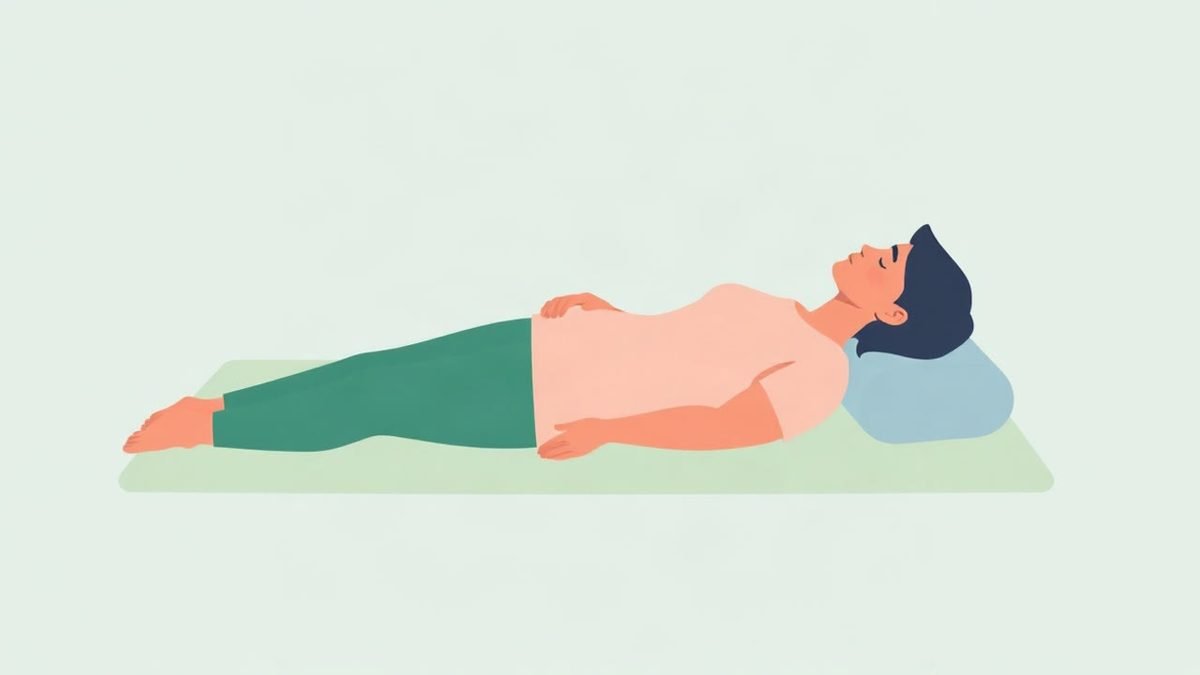
- Get comfortable. Lie on your back on your bed with your head and knees supported if that feels easier.
- Place your hands. Rest one hand on your upper chest and the other on your belly, just below your ribs. These are your measuring tools, not part of the effort.
- Breathe in gently and slowly. Let the air come in softly, without forcing it. Notice the hand on your belly rising a little while the hand on your chest stays mostly still.
- Breathe out gently. Let the breath leave at its own pace. The belly falls softly.
- Keep it easy. The whole point is relaxation. If you find yourself straining, counting obsessively or pushing your stomach, scale the effort back until it feels almost lazy.
- Continue for a few minutes. Start with two or three minutes and, if it feels comfortable, build toward 5 to 10 minutes, as MindTastik suggests.
Many beginners find that a light count helps attention settle. One gentle option from Mindful.net’s bedtime guide is to count each exhale from one to five, then start again at one. If counting feels fussy, simply noticing the rise and fall works just as well.
A short sample routine you can repeat nightly
- Dim the lights and put screens aside 5 to 10 minutes before bed (Mindful.net recommends this window).
- Get into bed and settle into the hand positions described above.
- Practise soft belly breathing, counting exhales from one to five if it helps.
- When the time is up, let go of the technique entirely. There is no pressure to fall asleep; the aim is simply a repeatable wind-down ritual.
Why might a bedtime breathing routine help?
According to Mindful.net, breathing for sleep means using slow, controlled breathing before or during bedtime to support relaxation, reduce arousal and make falling asleep easier. The idea is not that breathing acts as a command to become unconscious. Rather, it works as a readiness ritual: a signal to your body and mind that the day is winding down.
Regular practice may support sleep quality over time, though evidence varies between individuals, and Mindful.net is careful to note that breathing meditation is not a standalone treatment for chronic insomnia, sleep apnoea or other medical sleep disorders. Think of it as one helpful ingredient alongside the basics that sleep researchers consistently emphasise: dim light in the evening, a steady sleep schedule and less late-night stimulation.
There is also a practical benefit that has nothing to do with sleep itself. A few calm minutes of focused breathing gives your attention something gentle to rest on, which fits with the wind-down aim described in Mindful.net’s bedtime guide.
What should beginners avoid?
Three common pitfalls come up again and again in guides to this technique.
Forcing the movement
The belly should rise because the diaphragm is doing its natural work, not because you are pushing your stomach outward. Likewise, avoid gulping in big mouthfuls of air. If your shoulders creep up or your chest feels tight, you are trying too hard.
Chasing perfect counts or long breath holds
Mindful.net advises starting with gentle belly breathing or a slightly longer exhale before trying patterns with breath holds. Intense breathing or long holds can cause dizziness or chest discomfort in some people, and they are rarely necessary for a beginner bedtime routine. Comfort beats precision every time.
Expecting instant results
It is tempting to try a technique once, decide it does not work and move on. Mindful.net suggests using the same short routine nightly for at least a week before judging whether it helps. Small, repeatable habits tend to beat dramatic one-off efforts.
How do you adapt the routine if lying down is uncomfortable?
Lying flat does not suit everyone, particularly people with certain breathing or reflux concerns. The good news is that belly breathing is flexible.
Support your body
An extra pillow under your head and knees can make lying on your back much more comfortable. If you prefer your side, you can still practise: simply rest a hand on your belly and notice it moving as you breathe.
Try sitting instead
MindTastik notes that a simple starting position is lying down or sitting comfortably, with one hand on the chest and one on the belly. Sitting up in bed, well supported by pillows, works perfectly well and some people find it easier to keep the breath low and relaxed.
Pair it with other gentle techniques
If you have a lung condition, you may already know other gentle breathing methods. Our step-by-step guide to pursed-lip breathing covers a slow-exhale technique that some people find calming, and our overview of breathing exercises for lung conditions explains which approaches are commonly recommended and why. If breathing feels difficult in any position, that is a conversation for your GP, nurse or respiratory team rather than something to push through alone.
When should you stop or seek advice?
Any breathing practice should feel comfortable. Stop if you feel dizzy, strained or uncomfortable at any point, as MindTastik advises, and avoid intense breathing or long holds if they cause dizziness, chest discomfort or medical concern, as Mindful.net warns.
Breathing exercises are a supportive habit, not a treatment. Mindful.net is clear that a bedtime breathing routine is not a standalone treatment for chronic insomnia, sleep apnoea or other medical sleep disorders. Loud snoring, gasping during sleep, excessive daytime sleepiness or breathlessness that worries you all deserve proper assessment. Our article on bedtime breathing and daytime lung function looks at why night-time breathing problems and lung health are often connected, and why it is worth raising them with a healthcare professional.
If you live with a diagnosed respiratory condition, it is also sensible to mention any new breathing routine to your doctor, nurse or physiotherapist. They can confirm it suits your situation and adjust anything that does not.
How do you build the habit so it actually sticks?
A routine only helps if you keep doing it, so make it as easy as possible for your future, tired self.
- Attach it to something you already do. Practise straight after brushing your teeth or turning off the main light, so the cue is built in.
- Keep the session short. Five minutes done nightly beats fifteen minutes done occasionally.
- Drop the stakes. Mindful.net emphasises that there should be no pressure to fall asleep. If sleep arrives, wonderful; if not, you have still had a few calm minutes.
- Review after a week or two. Give the same routine a fair trial, as Mindful.net suggests, then decide whether to keep it, shorten it or try a different gentle option such as a body scan.
If you or someone else is severely breathless, cannot speak in full sentences, or has blue or grey lips, call 999.
Advertisement
Conscious Breathing (book)
A practical self-help book by Anders Olsson, founder of the Conscious Breathing Institute, about everyday breathing habits. Around £22 at the time of writing.
Affiliate link: we may earn a commission if you buy, at no extra cost to you. We have not tested this product. It is general education, not a medical treatment, and it does not replace your inhalers, prescribed care or pulmonary rehabilitation. If you have a lung condition, check with your GP or respiratory team before changing how you breathe or exercise.
FAQ
How long should I practise belly breathing at bedtime?
Start with just a few minutes and build toward 5 to 10 minutes if it feels comfortable, which is the range suggested by MindTastik. A short, repeatable practice is more useful than a long, occasional one.
Should I breathe through my nose or my mouth?
Nose breathing is the usual choice for a calm bedtime practice, as it naturally slows the breath. That said, comfort matters more than rules; if your nose is blocked, breathe in whatever way feels relaxed.
Can belly breathing help me fall asleep faster?
Slow, controlled breathing may support relaxation and make falling asleep easier, according to Mindful.net, but it is not a switch you can flip. Results vary between people, so give the routine at least a week of nightly practice before judging it.
Is it normal for my chest hand to move a little?
Yes. The aim is for the belly hand to move more while the chest hand stays mostly still, but a little chest movement is normal. If your chest is doing all the work, simply soften your effort and let the breath settle lower.
Can I do this if I have a lung condition?
Many people with respiratory conditions are taught gentle breathing techniques, but it is wise to check with your doctor, nurse or respiratory team first, especially if lying flat or slow breathing causes discomfort or breathlessness.
A calm few minutes, tonight
Belly breathing lying down asks very little of you: a comfortable position, two resting hands and a few soft, unhurried breaths. Practised gently each evening as part of a wider wind-down, it may help ease the transition from a busy day to a restful night, without any pressure or performance.
If you would like to explore further, our guide to pursed-lip breathing offers another simple, slow-exhale technique that pairs nicely with a bedtime routine.
Sources
- Breathing exercises for stress (NHS)
- Shortness of breath (NHS)
- Belly Breathing Technique | MindTastik Meditation
- Breathing Meditation Before Bed: A Guide | Mindful.net
- Breathing for Sleep: Gentle Bedtime Methods | Mindful.net
This article is general information and not a substitute for professional medical advice.
If you have symptoms or concerns, speak to your GP or a qualified health professional.
Editorial note: this is general health information, not medical advice. Our articles are written and checked against published guidance by our editorial team and are not reviewed by a clinician unless the article says so. If your care team has told you something different, follow their advice.
Leave a Reply