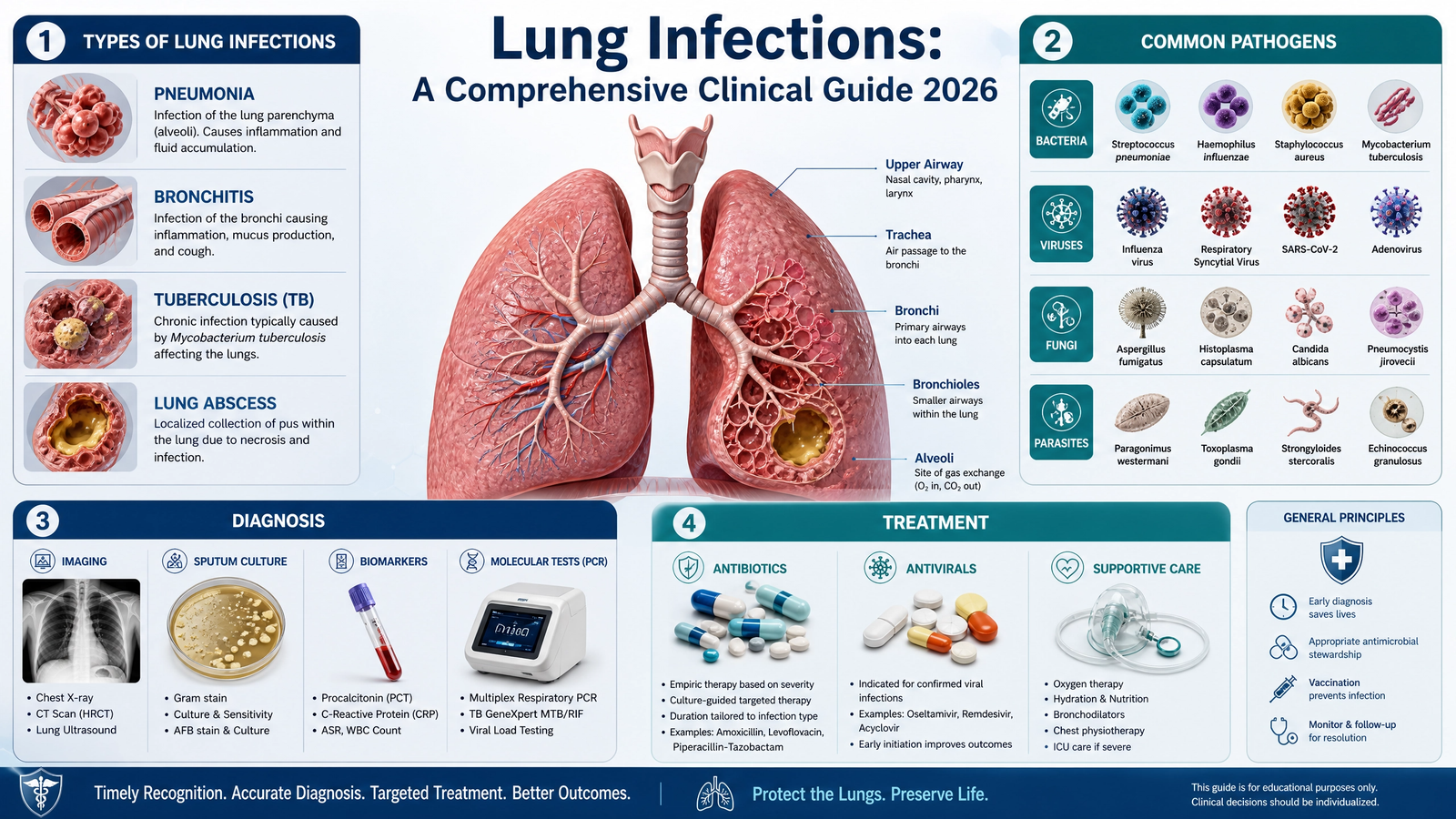
Lung Infections: A Comprehensive Clinical Guide to Types, Pathogens, Diagnosis, and Treatment
A complete, peer-reviewed resource on lower respiratory tract infections — from bronchitis and pneumonia to lung abscess and empyema
I. Introduction: The Global Burden of Lower Respiratory Infections
Lower respiratory tract infections (LRTIs) remain the deadliest communicable disease category worldwide, accounting for approximately 2.5 million deaths annually according to the Global Burden of Disease Study 2023. This mortality burden exceeds that of HIV/AIDS, tuberculosis, and malaria combined. While high-income countries have achieved significant reductions through vaccination, antibiotics, and critical care, LRTIs continue to exact disproportionate tolls on elderly populations, immunocompromised individuals, children under five, and residents of low-resource settings.
Understanding the taxonomy, pathophysiology, and evidence-based management of lung infections requires integration of anatomical localization, microbiological identification, host immune status, and clinical epidemiology. This guide synthesizes current guidelines from the American Thoracic Society (ATS), European Respiratory Society (ERS), Infectious Diseases Society of America (IDSA), and British Thoracic Society (BTS) to provide a comprehensive clinical reference.
• 2.5 million annual deaths from lower respiratory infections
• 5th leading cause of death globally (IHME 2023)
• 15 million hospitalizations annually in high-income countries
• Leading cause of sepsis and septic shock (32% of cases)
• 30-50% of antibiotic prescriptions in adults are for suspected LRTI
II. Anatomical Classification of Lung Infections
Lung infections localize to specific anatomical compartments, each with distinct clinical presentations, implicated pathogens, and management approaches.
| Infection Type | Anatomical Site | Predominant Pathogens | Key Clinical Feature |
|---|---|---|---|
| Acute Bronchitis | Trachea and bronchi | Viral (90%): rhinovirus, influenza, RSV, SARS-CoV-2 | Cough lasting 1-3 weeks, often post-viral |
| Bronchiolitis | Bronchioles | RSV (children), adenovirus, hMPV, influenza | Wheezing, respiratory distress in infants |
| Lobar Pneumonia | Entire lung lobe | S. pneumoniae (most common), K. pneumoniae, Legionella | Homogeneous consolidation on CXR |
| Bronchopneumonia (Lobular) | Patchy, multifocal | S. aureus, H. influenzae, M. catarrhalis, Gram-negatives | Patchy opacities, often bilateral |
| Interstitial Pneumonia | Alveolar walls/interstitium | Viral, M. pneumoniae, C. pneumoniae, P. jirovecii | Reticular/ground-glass opacities |
| Aspiration Pneumonia | Dependent lung segments | Oral anaerobes (Fusobacterium, Peptostreptococcus, Bacteroides) | Right lower lobe predilection, poor dentition |
| Lung Abscess | Cavitary necrosis | S. aureus (MRSA), Klebsiella, anaerobes, Nocardia, TB | Cavitary lesion with air-fluid level |
| Empyema | Pleural space | S. pneumoniae, S. aureus, anaerobes, TB | Pleural fluid pus, loculation, thickened pleura |
Bronchiolitis: The Pediatric Predicament
Bronchiolitis, predominantly affecting infants under 12 months of age, represents the leading cause of hospitalization in this age group. Respiratory syncytial virus (RSV) accounts for 60-80% of cases, with seasonal epidemics from November to March in temperate climates. Diagnosis is clinical: rhinorrhea, cough, tachypnea, wheezing, crackles, and hypoxemia. Severe cases (feeding difficulty, apnea, respiratory failure) require hospitalization. Management is supportive — supplemental oxygen, nasal suctioning, hydration. Palivizumab prophylaxis is reserved for high-risk infants (prematurity, congenital heart disease, chronic lung disease).
Acute Bronchitis: The Diagnostic Challenge
Acute bronchitis accounts for 10 million outpatient visits annually in the United States. Despite viral etiology in 90% of cases, antibiotics are prescribed in 60-70% of visits — a major driver of antibiotic resistance. Clinical features include cough (duration 1-3 weeks), sputum production (initially clear, may become purulent without bacterial infection), chest discomfort, and low-grade fever. Purulent sputum does NOT reliably indicate bacterial infection. Management focuses on symptom relief: honey (adults and children >1 year), dextromethorphan for dry cough, guaifenesin for productive cough, inhaled bronchodilators if wheezing. Antibiotics are indicated only for suspected pertussis (PCR-confirmed) or in patients with underlying chronic lung disease (COPD, bronchiectasis, cystic fibrosis).
III. Microbiological Classification of Pneumonia
Pneumonia etiology is categorized by pathogen type, each with characteristic clinical syndromes, radiographic findings, and treatment requirements.
Bacterial Pneumonia: The Classic Presentation
Streptococcus pneumoniae remains the most common cause of community-acquired pneumonia (CAP) worldwide, accounting for 30-50% of cases requiring hospitalization. Penicillin resistance rates exceed 20% in many regions, though most isolates remain susceptible to third-generation cephalosporins and respiratory fluoroquinolones. The classic presentation includes abrupt onset, high fever (often with rigors), productive cough with "rusty" sputum, pleuritic chest pain, and lobar consolidation on chest X-ray.
Staphylococcus aureus pneumonia presents with high fever, hemoptysis, rapid cavitation, and empyema formation. Methicillin-resistant S. aureus (MRSA) is particularly aggressive and is associated with influenza co-infection (post-influenza MRSA pneumonia carries >50% mortality).
Klebsiella pneumoniae ("Friedländer bacillus") causes lobar pneumonia in patients with alcoholism, diabetes, or chronic lung disease. "Currant jelly" sputum (thick, bloody, mucoid) and bulging fissure sign on CXR are characteristic, though not pathognomonic.
Hospitalization decision should incorporate the CURB-65 score: Confusion (1), Uremia BUN >19 mg/dL (1), Respiratory rate ≥30 (1), low Blood pressure (SBP <90 or DBP ≤60, 1), age ≥65 (1). Score 0-1: outpatient. Score 2: consider short hospitalization. Score ≥3: inpatient. Additional criteria for hospitalization: hypoxemia (SpO2 <90%), inability to maintain oral intake, social factors.
Atypical Pneumonia: The Walking Pneumonia
Atypical pneumonia, caused by Mycoplasma pneumoniae, Chlamydia pneumoniae, or Legionella pneumophila, presents with prominent extrapulmonary manifestations: headache, myalgias, malaise, sore throat, and gastrointestinal symptoms out of proportion to pulmonary findings. Cough is typically dry, non-productive, and may persist for weeks. Mycoplasma is the most common cause of CAP in school-aged children and young adults. Diagnosis requires PCR or serology (cold agglutinins are insensitive and non-specific). Treatment requires macrolides (azithromycin 500mg day 1, then 250mg days 2-5), doxycycline (100mg BID for 7-10 days), or respiratory fluoroquinolones (levofloxacin 750mg daily for 5-7 days). Beta-lactams (penicillins, cephalosporins) are ineffective against atypicals.
Legionella should be suspected in patients with severe pneumonia, hyponatremia (Na <130 mEq/L), elevated liver enzymes, and risk factors (travel, recent hotel/hospital stay, hot tub exposure). Urine antigen testing detects serogroup 1 (accounts for 70% of cases). Treatment requires macrolides or fluoroquinolones; beta-lactams are ineffective. Pontiac fever (self-limited febrile illness without pneumonia) is a milder Legionella syndrome.
IV. Viral Lung Infections
Viral pathogens account for 20-30% of adult CAP and over 50% of childhood pneumonia. The COVID-19 pandemic fundamentally altered understanding of viral pneumonia severity and management.
Influenza causes annual epidemics with 3-5 million severe cases and 300,000-650,000 deaths globally. Clinical features include abrupt onset of fever, myalgias, headache, malaise, and non-productive cough. Diagnosis by rapid molecular testing (PCR) is preferred over rapid antigen tests (lower sensitivity). Antiviral treatment (oseltamivir 75mg BID for 5 days, baloxavir marboxil single dose) is most effective within 48 hours of symptom onset but may be considered up to 5 days in hospitalized patients.
Respiratory Syncytial Virus (RSV) causes bronchiolitis in infants and severe pneumonia in elderly and immunocompromised adults. Newly approved vaccines (Arexvy, Abrysvo) are recommended for adults ≥60 years. Nirsevimab (monoclonal antibody) provides passive immunity for infants entering their first RSV season.
SARS-CoV-2 (COVID-19) pneumonia ranges from mild upper respiratory symptoms to acute respiratory distress syndrome (ARDS). Management includes supportive care, dexamethasone (if hypoxemic requiring oxygen or mechanical ventilation), remdesivir (in select hospitalized patients), and nirmatrelvir/ritonavir (Paxlovid) for outpatients at high risk for progression.
hMPV causes 5-10% of respiratory hospitalizations in children and elderly, with clinical presentation nearly indistinguishable from RSV. HPIV types 1-3 cause croup (stridor, barking cough) in children and pneumonia in immunocompromised hosts. No antivirals are approved; management is supportive.
V. Fungal Lung Infections
Fungal pneumonia occurs predominantly in immunocompromised hosts (HIV/AIDS with CD4 <200, solid organ transplant recipients, hematologic malignancy, prolonged high-dose corticosteroids, biologic immunomodulators). However, endemic mycoses can cause disease in immunocompetent individuals in geographic endemic regions.
Pneumocystis jirovecii pneumonia (PJP) remains the most common opportunistic infection in HIV/AIDS patients (CD4 <200) and is increasing in non-HIV immunocompromised hosts. Presenting symptoms: subacute dyspnea, dry cough, fever. Classic CXR finding: bilateral interstitial infiltrates ("ground-glass" opacities). Hypoxemia is out of proportion to radiographic findings. Diagnosis requires induced sputum or BAL with Gomori methenamine silver (GMS) or immunofluorescent staining. Treatment: high-dose trimethoprim-sulfamethoxazole (TMP-SMX) for 21 days. Prophylaxis (TMP-SMX daily) is indicated for CD4 <200 in HIV or equivalent immunosuppression.
Endemic Mycoses:
Histoplasmosis (Ohio and Mississippi River valleys) — acute pulmonary histoplasmosis mimics CAP; chronic cavitary histoplasmosis resembles reactivation TB. Urine antigen testing is sensitive and specific.
Coccidioidomycosis ("Valley Fever," southwestern US) — primary pulmonary infection often asymptomatic; symptomatic cases present with fever, cough, chest pain, erythema nodosum (more common in women). Serology (complement fixation) confirms diagnosis.
Blastomycosis (Great Lakes, Mississippi/Ohio River valleys) — pulmonary blastomycosis may be asymptomatic or progressive; cutaneous dissemination (verrucous lesions) is characteristic.
VI. Clinical Presentation and Diagnostic Approach
Distinguishing bacterial from viral pneumonia and identifying specific pathogens requires integration of clinical features, biomarkers, imaging, and microbiologic testing.
Clinical Features by Etiology
| Feature | Bacterial (Typical) | Viral | Atypical | Fungal (Endemic) |
|---|---|---|---|---|
| Onset | Acute (hours-days) | Subacute (2-5 days) | Insidious (1-3 weeks) | Insidious to subacute |
| Fever | High (>39°C) with rigors | Moderate (38-39°C) | Low-grade or absent | Variable, often low-grade |
| Cough | Productive, purulent sputum | Dry initially, may become productive | Dry, persistent | Dry or mildly productive |
| Extrapulmonary | Minimal | Myalgias, headache, fatigue | Prominent (headache, GI, rash) | Skin lesions (dissemination) |
| Procalcitonin | Elevated (>0.25 ng/mL) | Normal (<0.1 ng/mL) | Normal or mildly elevated | Normal |
| Leukocytosis | Yes (left shift) | Normal or mild | Normal | Normal or mild |
Procalcitonin (PCT) is the most useful biomarker for differentiating bacterial from viral infection. PCT <0.1 ng/mL strongly suggests viral or atypical etiology (antibiotics not indicated). PCT >0.25 ng/mL supports bacterial infection (antibiotics indicated). PCT-driven algorithms reduce antibiotic exposure without worsening outcomes.
Diagnostic Testing Algorithm
All hospitalized patients with suspected pneumonia should undergo:
- Blood cultures (2 sets before antibiotics) — yield 5-15%, higher in severe pneumonia
- Sputum Gram stain and culture — purulent sputum specimen with >25 WBC and <10 epithelial cells per low-power field
- Urinary antigen tests for S. pneumoniae and Legionella (serogroup 1)
- Nasopharyngeal PCR for respiratory viruses (influenza, RSV, SARS-CoV-2, hMPV, adenovirus, rhinovirus)
- Mycoplasma pneumoniae and Chlamydia pneumoniae PCR (if atypical suspected)
- HIV testing (if risk factors or unexplained CD4 lymphopenia)
Bronchoscopy with bronchoalveolar lavage (BAL) is reserved for immunocompromised hosts, severe pneumonia not responding to empiric therapy, or suspected non-infectious etiology.
Chest CT is indicated when: CXR is normal but clinical suspicion remains high, complications are suspected (empyema, abscess, necrotizing pneumonia), or immunocompromised hosts with normal CXR. CT findings can distinguish interstitial from alveolar processes, identify cavitary lesions, and guide bronchoscopy. CT also rules out PE or lung cancer in the differential diagnosis.
VII. Evidence-Based Treatment Protocols
Empiric Antibiotic Selection by Site of Care
| Patient Population | First-Line Empiric Regimen | Alternative (Allergy/Penicillin) |
|---|---|---|
| Outpatient — No comorbidities | Amoxicillin 1g TID or Doxycycline 100mg BID or Azithromycin 500mg then 250mg for 5 days | Respiratory fluoroquinolone (levofloxacin 750mg daily) |
| Outpatient — Comorbidities (COPD, diabetes, heart/liver/renal disease) | Amoxicillin-clavulanate 875/125mg BID + azithromycin or doxycycline | Respiratory fluoroquinolone monotherapy |
| Inpatient (non-ICU) | Beta-lactam (ceftriaxone 1g IV daily or ampicillin-sulbactam 3g IV q6h) + macrolide or doxycycline | Respiratory fluoroquinolone monotherapy |
| Inpatient (ICU — no Pseudomonas risk) | Beta-lactam (ceftriaxone, cefotaxime, ampicillin-sulbactam) + macrolide | Beta-lactam + respiratory fluoroquinolone |
| ICU — Pseudomonas risk factors (structural lung disease, prolonged steroids, broad-spectrum antibiotics past 90 days) | Anti-pseudomonal beta-lactam (piperacillin-tazobactam, cefepime, meropenem) + ciprofloxacin or levofloxacin | Add aminoglycoside |
Treatment duration: 5-7 days for most CAP (shorter if rapid defervescence). Longer duration (10-14 days) for empyema, lung abscess, or immunosuppression. Clinical stability criteria for switch from IV to oral: afebrile for 48 hours, improving cough and dyspnea, tolerating oral intake, stable or improving vital signs.
Resistant Pathogens and Special Situations
Methicillin-resistant S. aureus (MRSA) — risk factors: healthcare exposure, prior MRSA, severe pneumonia with cavitation, post-influenza. Empiric coverage: vancomycin (15 mg/kg IV q8-12h targeting trough 15-20 mcg/mL) or linezolid (600mg IV/PO q12h).
Extended-spectrum beta-lactamase (ESBL)-producing organisms — carbapenems (meropenem, imipenem) are drugs of choice. Consider ceftazidime-avibactam or ceftolozane-tazobactam for resistance.
Community-acquired MRSA (CA-MRSA) — often carries PVL toxin causing necrotizing pneumonia. Linezolid may be preferred over vancomycin due to superior toxin suppression and lung penetration.
True penicillin allergy (anaphylaxis, Stevens-Johnson syndrome, hives within 1 hour) contraindicates beta-lactams. For non-severe reactions (delayed rash, GI intolerance), penicillin skin testing can safely identify low-risk patients who tolerate cephalosporins.
VIII. Complications, Prevention, and High-Risk Populations
Major Complications of Lung Infections
- Parapneumonic effusion and empyema — pleural fluid pH <7.20, glucose <60 mg/dL, LDH >1000 U/L indicate complicated effusion requiring drainage. Empyema (pus in pleural space) requires chest tube drainage ± intrapleural fibrinolytics (tPA + DNase).
- Lung abscess — cavitary lesion with air-fluid level. Managed with prolonged antibiotics (4-6 weeks) and drainage (percutaneous or bronchoscopic) if large (>4 cm) or refractory.
- Necrotizing pneumonia — progressive cavitation, often due to S. aureus (PVL-positive) or K. pneumoniae. Requires extended antibiotics and may need surgical resection.
- Acute respiratory distress syndrome (ARDS) — 5-10% of hospitalized pneumonia patients require mechanical ventilation. Lung-protective ventilation (tidal volume 6 mL/kg PBW, plateau pressure ≤30 cm H2O) improves survival.
- Sepsis and septic shock — early recognition, fluid resuscitation, vasopressors (norepinephrine first-line), and source control (antibiotics) are critical. Mortality exceeds 30%.
Vaccination: The Most Effective Prevention
Pneumococcal vaccines: PCV20 (single dose) or PCV15 followed by PPSV23 for all adults ≥65 years, adults 19-64 with chronic conditions, immunocompromised, asplenia, or CSF leaks.
Influenza vaccine: Annually for all individuals ≥6 months. High-dose or adjuvanted formulations preferred for adults ≥65 years.
COVID-19 vaccines: Primary series plus boosters (bivalent or monovalent XBB.1.5) for all eligible individuals.
RSV vaccine: Arexvy or Abrysvo for adults ≥60 years (shared clinical decision-making).
Tdap (pertussis) vaccine: One dose in adulthood (if not received), then Tdap or Td every 10 years.
High-Risk Populations Requiring Aggressive Management
- Elderly (>65 years): Atypical presentation (confusion, falls without fever), higher mortality, lower vaccine response, need for higher index of suspicion.
- COPD patients: Pneumonia risk 2-3x higher; recommend inhaled corticosteroid withdrawal (if stable) reduces pneumonia risk without increasing exacerbations.
- Immunocompromised hosts (HIV, transplant, chemotherapy, biologics): Broader differential (PJP, fungi, NTM, CMV). Lower threshold for bronchoscopy. Anticipate atypical presentation and progression.
- Diabetes mellitus: Higher risk of bacteremia, empyema, and mortality. Optimal glycemic control reduces infection risk.
- Pregnant patients: Influenza pneumonia causes higher mortality; oseltamivir is safe and recommended. Use pregnancy-appropriate antibiotics (beta-lactams, macrolides). Avoid doxycycline (teratogenic).
IX. Interactive Clinical Assessment Tools
🫁 Lung Infection Risk Assessment Calculator
This validated screening tool evaluates your risk for serious lower respiratory infection based on clinical parameters and risk factors.
🎯 Pneumonia Etiology Identifier Quiz
Based on your symptom pattern, this quiz suggests likely pathogen categories (bacterial, viral, atypical, or fungal) to guide appropriate testing and treatment discussions with your physician.
X. Frequently Asked Questions
Upper respiratory infections (URIs) affect the nose, sinuses, pharynx, and larynx (common cold, sinusitis, pharyngitis). Lower respiratory infections (LRIs) affect the trachea, bronchi, bronchioles, and lung parenchyma (bronchitis, bronchiolitis, pneumonia). LRIs cause greater morbidity and mortality due to impaired gas exchange and systemic inflammation.
No single symptom reliably distinguishes bacterial from viral pneumonia. However, bacterial pneumonia often presents with abrupt onset, high fever, rigors, purulent sputum, and elevated procalcitonin (>0.25 ng/mL). Viral pneumonia more frequently causes dry cough, myalgias, and normal procalcitonin. Definitive diagnosis requires microbiologic testing (sputum culture, PCR).
Chest X-ray findings vary by pneumonia type: lobar pneumonia shows homogeneous opacification of an entire lobe (often S. pneumoniae). Bronchopneumonia shows patchy, multifocal opacities (S. aureus, H. influenzae). Interstitial pneumonia shows reticular or ground-glass opacities (viral, M. pneumoniae). Cavitary lesions suggest TB, abscess, or necrotizing pneumonia.
IDSA/ATS guidelines recommend amoxicillin, doxycycline, or a macrolide (azithromycin) for outpatient CAP in otherwise healthy patients without comorbidities. For patients with comorbidities or recent antibiotics, respiratory fluoroquinolone (levofloxacin, moxifloxacin) or beta-lactam plus macrolide is recommended. Treatment duration is typically 5-7 days.
Hospitalization criteria using CURB-65 score: Confusion (1), Uremia (BUN >19 mg/dL, 1), Respiratory rate ≥30 (1), low Blood pressure (SBP <90 or DBP ≤60, 1), age ≥65 (1). Score 0-1: outpatient. Score 2: consider short hospitalization. Score ≥3: inpatient. Additional criteria: hypoxemia (SpO2 <90%), inability to maintain oral intake, social factors.
CAP (Community-Acquired Pneumonia) occurs in non-hospitalized patients. HAP (Hospital-Acquired Pneumonia) develops ≥48 hours after hospital admission. VAP (Ventilator-Associated Pneumonia) occurs ≥48 hours after endotracheal intubation. HAP/VAP are more likely to involve MDR pathogens (MRSA, Pseudomonas, Acinetobacter, KPC-producing Klebsiella).
CDC recommends PCV20 or PCV15 followed by PPSV23 for: all adults ≥65 years, adults 19-64 years with chronic conditions (COPD, diabetes, heart disease, chronic liver/kidney disease, alcoholism), immunocompromised individuals (asplenia, sickle cell, HIV, cochlear implants, CSF leaks), and cigarette smokers.
Atypical pneumonia (walking pneumonia) is caused by organisms that do not stain on Gram stain, are resistant to beta-lactam antibiotics, and produce milder symptoms with prominent extrapulmonary manifestations. Causative agents: Mycoplasma pneumoniae (most common), Chlamydia pneumoniae, Legionella pneumophila, and viral pathogens. Treatment requires macrolides, doxycycline, or fluoroquinolones.
Aspiration pneumonia results from inhalation of oropharyngeal or gastric contents into the lower respiratory tract. Risk factors include impaired consciousness (alcohol, sedation, stroke, seizures), dysphagia (neurologic disease, esophageal disorders), poor dentition, and tube feeding. Pathogens include oral anaerobes (Fusobacterium, Peptostreptococcus, Bacteroides) and Gram-negatives. Treatment requires beta-lactam/beta-lactamase inhibitor (ampicillin-sulbactam, amoxicillin-clavulanate) or carbapenem.
Recovery from pneumonia typically occurs in phases: fever resolves in 2-4 days with appropriate antibiotics; cough improves over 2-4 weeks; fatigue may persist for 4-8 weeks. Complete radiographic resolution may take 4-12 weeks, especially in elderly or smokers. Follow-up chest X-ray at 6-8 weeks is recommended to confirm resolution and exclude underlying malignancy.
Leave a Reply