Quick Answer
Excess weight and COPD create a dangerous synergistic condition that worsens breathing through two primary mechanisms: mechanical compression of the lungs and diaphragm, and biochemical inflammation from adipose tissue. Obesity Hypoventilation Syndrome (OHS) affects up to 20% of obese COPD patients, causing decreased functional residual capacity, reduced lung compliance, and elevated inflammatory cytokines that aggravate airway disease. Research shows that intentional weight loss of even 5–10% significantly improves spirometric values, reduces daytime and nocturnal hypoxemia, and decreases dyspnea perception. Click here to learn more about Over 40 Keto →
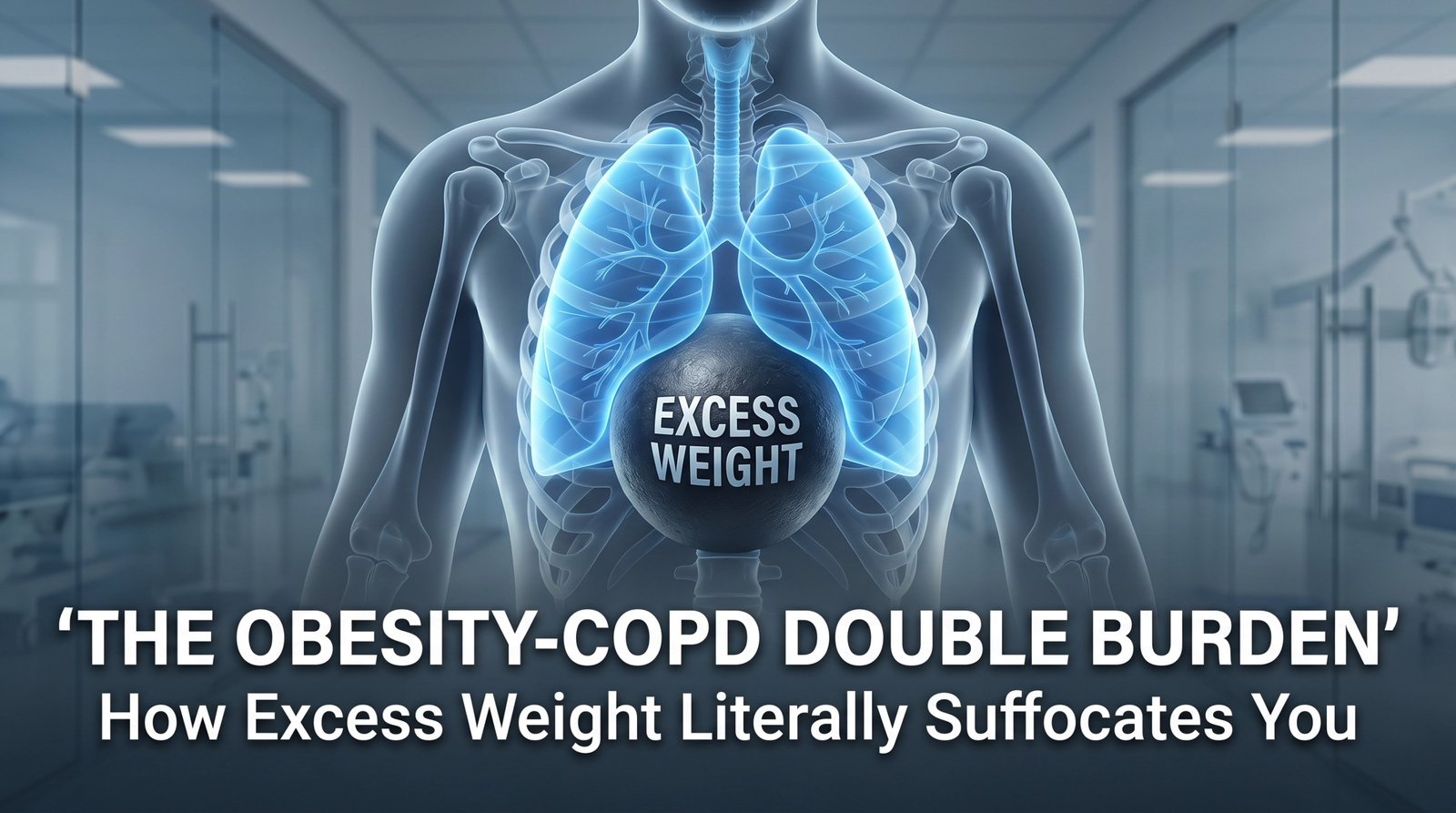
The Obesity-COPD Double Burden: How Excess Weight Literally Suffocates You
Robert sat in the examination room, oxygen tubing draped across his shoulders, and tried to explain to his pulmonologist why he could no longer sleep lying flat. At 67 years old and 280 pounds, his COPD had been stable for years — until the weight gain began. Now he woke gasping multiple times each night, his pillow soaked with sweat, his morning headaches becoming unbearable. His physician recognized the pattern immediately: the obesity-COPD double burden, progressing to frank obesity hypoventilation syndrome, a condition that literally suffocates its victims while they sleep.
The convergence of obesity and chronic obstructive pulmonary disease represents one of the most underappreciated crises in respiratory medicine. Each condition alone imposes significant morbidity; together, they create an interaction that exceeds the sum of their parts. Understanding how excess weight mechanically and biochemically suffocates the respiratory system is the first step toward breaking free.
Understanding Obesity Hypoventilation Syndrome: When Weight Overrides Your Drive to Breathe
Obesity Hypoventilation Syndrome (OHS), also known as Pickwickian syndrome, is defined by the triad of obesity (BMI ≥ 30 kg/m²), daytime hypercapnia (PaCO₂ > 45 mmHg), and sleep-disordered breathing, in the absence of other causes of hypoventilation. It affects an estimated 10–20% of obese COPD patients, though prevalence data vary widely due to underdiagnosis.
The pathophysiology of OHS involves a complex interplay between mechanical load, neurohormonal dysregulation, and ventilatory control abnormalities. Excess adipose tissue in the chest wall and abdomen increases the elastic work of breathing and reduces lung compliance. The diaphragm operates at a mechanical disadvantage, flattened by the mass beneath it, generating less inspiratory force per contraction.
Simultaneously, leptin resistance develops in obesity. Leptin, which normally stimulates ventilation, fails to adequately drive the respiratory centers in the medulla. The combination of increased ventilatory load and inadequate ventilatory drive produces chronic hypoventilation, manifesting as daytime hypercapnia and nocturnal desaturation.
For COPD patients whose respiratory reserve is already compromised by airflow obstruction and gas trapping, the additional burden of OHS can precipitate respiratory failure, hospitalization, and reduced survival. The obesity-COPD overlap is not merely additive — it is multiplicative.
The Mechanics of Suffocation: How Adipose Restricts Every Phase of Breathing
To understand how weight suffocates, one must appreciate the respiratory mechanics at play. The respiratory system consists of the lungs and chest wall, working in concert to move air. Excess adipose tissue impairs this system at multiple points.
Functional Residual Capacity (FRC) — the volume of air remaining in the lungs at end-expiration — decreases substantially with obesity. Studies demonstrate FRC reductions of 20–30% in moderate obesity and up to 50% in severe obesity. This decrease occurs because the weight of the abdomen pushes the diaphragm cephalad, reducing the resting lung volume. For COPD patients who already experience air trapping and elevated residual volumes, this additional FRC reduction leaves dangerously little functional reserve.
Expiratory Reserve Volume (ERV) — the additional air that can be exhaled beyond tidal breathing — suffers the most dramatic reduction. Obese individuals may lose 60–70% of their ERV, effectively eliminating the buffer zone that protects against desaturation during exertion. This explains why obese respiratory patients desaturate so rapidly with minimal activity.
Compliance — the distensibility of the respiratory system — decreases as chest wall adipose tissue stiffens the bellows. The lungs and chest wall must work harder to achieve the same tidal volume, increasing the oxygen cost of breathing. In severe obesity, the respiratory muscles may consume 15–20% of total oxygen production at rest, compared to 2–3% in healthy individuals.
The Inflammatory Cascade: Adipose Tissue as an Endocrine Organ Gone Rogue
If mechanical compression were the only problem, weight loss would be merely a matter of unloading. But adipose tissue is biologically active, secreting over 50 recognized signaling molecules — adipokines — that circulate throughout the body and affect distant organs, including the lungs.
In lean individuals, adipokine secretion maintains metabolic homeostasis. In obesity, the expanded adipose tissue mass and the hypoxic conditions within large fat depots trigger a shift toward pro-inflammatory adipokine profiles. TNF-α, IL-6, IL-1β, and resistin rise while adiponectin — an anti-inflammatory adipokine — falls. This adipokine dysregulation creates a systemic inflammatory environment that reaches the airways.
The lungs are particularly vulnerable to systemic inflammation because of their extensive vascular network and delicate epithelial barrier. Circulating cytokines activate alveolar macrophages, recruit neutrophils, and amplify the oxidative stress that characterizes COPD. The result is accelerated disease progression, more frequent exacerbations, and poorer response to standard therapies.
Adipose tissue infiltration of the airway walls themselves has been demonstrated in histopathological studies. This “ectopic” fat deposition narrows the lumen, increases wall thickness, and contributes to the small airway dysfunction that is increasingly recognized as central to COPD pathophysiology.
The Respiratory Connection
The obesity-COPD double burden operates through a devastating feedback loop: excess weight compresses the lungs mechanically while adipokine secretion inflames them chemically. The resulting breathlessness limits physical activity, preventing weight loss and enabling further gain. Breaking this cycle at any point — but most effectively through targeted weight reduction — can halt the downward spiral and restore functional capacity.
Decreased Functional Reserve: Why Obese COPD Patients Have No Margin for Error
Healthy individuals operate with substantial respiratory reserve. During exertion, they can increase ventilation five- to ten-fold above resting levels. COPD patients lose much of this reserve to airflow obstruction and gas trapping. Obese COPD patients lose yet more to mechanical restriction.
The concept of “functional reserve” explains why the same exacerbation that causes modest symptoms in a lean COPD patient can precipitate respiratory failure in an obese patient. There is simply no buffer. A mild respiratory infection that increases secretions and airway resistance may be the straw that breaks the camel’s back when FRC is already critically reduced and respiratory muscles already operating near maximum.
This diminished reserve also explains the phenomenon of “unexpected” respiratory decompensation during procedures. Obese COPD patients may tolerate lying supine while awake, but sedation or anesthesia removes the accessory muscle contribution to breathing, and the supine position further displaces the diaphragm cephalad. The combination can produce acute-on-chronic respiratory failure in situations that non-obese patients navigate without difficulty.
Nocturnal Desaturation: The Silent Killer in Sleep
Sleep represents the most dangerous period for patients with the obesity-COPD overlap. During sleep, muscle tone decreases throughout the body, including the upper airway dilator muscles and the accessory muscles of respiration. The diaphragm assumes a greater burden — but in obese patients, it is already mechanically disadvantaged.
Rapid Eye Movement (REM) sleep is particularly hazardous. During REM, diaphragmatic activity becomes irregular and may paradoxically decrease, while the intercostal muscles are actively inhibited. The obese patient with reduced FRC and flattened diaphragm faces a perfect storm: decreased drive, decreased muscle tone, and mechanical loading that overwhelms the diminished ventilatory capacity.
The result is nocturnal desaturation — repeated drops in blood oxygen levels that the patient may never know are occurring. These desaturations fragment sleep architecture, producing daytime somnolence, cognitive impairment, and morning headaches from hypercapnia. Over time, chronic intermittent hypoxia contributes to pulmonary hypertension, right heart failure, and increased mortality.
Breaking the Cycle: Evidence for Weight Loss in the Obesity-COPD Overlap
The evidence supporting weight loss in this population is robust and growing. Bariatric surgery studies provide the most dramatic examples: patients losing 30–50% of excess body weight demonstrate FEV1 improvements of 80–200 mL, resolution of OHS in 80–85% of cases, and dramatic improvements in sleep-disordered breathing indices.
But surgical intervention is not appropriate or accessible for all patients. Fortunately, dietary interventions produce meaningful benefits at more modest weight loss thresholds. Studies of 5–10% body weight reduction through caloric restriction demonstrate:
- Improvements in FVC and FEV1 of 50–150 mL
- Increased six-minute walk distance of 30–80 meters
- Reductions in Epworth Sleepiness Scale scores
- Decreased supplemental oxygen requirements
- Improved health-related quality of life scores
These improvements emerge at weight loss levels achievable through sustained dietary change — no surgery required. For patients who have felt trapped by their dual diagnoses, this represents a pathway to genuine improvement.
Why Standard Weight Loss Advice Fails Respiratory Patients
The conventional prescription for weight loss — “eat less, exercise more” — is not merely unhelpful for obese COPD patients; it can be cruelly impossible. Exercise intolerance is not laziness; it is a physiological consequence of ventilatory limitation. A patient whose maximum ventilatory capacity is 30 L/min cannot safely achieve the exercise intensity required for significant caloric expenditure.
Dietary approaches must therefore carry the primary burden of weight management. But standard low-calorie diets often fail in this population due to hunger, metabolic adaptation, and the unique challenges of respiratory medications. Corticosteroids increase appetite and promote central obesity. Bronchodilators may cause tachycardia that patients mistake for hunger or anxiety. Depression, affecting up to 40% of COPD patients, drives emotional eating.
Successful approaches must address these realities: providing sufficient protein to preserve respiratory muscle mass, managing hunger through metabolic strategies rather than willpower alone, and structuring implementation to accommodate energy limitations and medication effects.
Don’t let excess weight continue suffocating your lungs.
Discover a targeted approach to weight loss designed specifically for respiratory patients who struggle with breathlessness and limited exercise capacity.
Click here to learn more about Over 40 Keto →Pros and Cons: Addressing the Obesity-Respiratory Overlap
Benefits of Targeted Intervention
- Restores functional residual capacity and expiratory reserve
- Reduces inflammatory adipokine load on compromised airways
- Improves nocturnal oxygenation and sleep architecture
- Decreases respiratory muscle work and oxygen cost of breathing
- May reduce supplemental oxygen and medication requirements
- Restores patient agency and breaks the vicious cycle
Important Considerations
- Requires medical supervision with baseline arterial blood gas
- Rapid weight loss can precipitate gallstones in some patients
- Electrolyte monitoring essential, especially with diuretics
- May need non-invasive ventilation support during transition
- Psychological support for emotional eating patterns
- Individual results depend on baseline disease severity
Frequently Asked Questions
How do I know if I have Obesity Hypoventilation Syndrome?
OHS requires medical diagnosis through arterial blood gas measurement showing elevated PaCO₂ (>45 mmHg) during wakefulness, in the setting of obesity and without other causes of hypoventilation. Symptoms include daytime sleepiness, morning headaches, difficulty sleeping flat, and cognitive fog. If you suspect OHS, request evaluation by a pulmonologist or sleep medicine specialist.
Why does my COPD feel so much worse since I gained weight?
Weight gain compounds COPD through multiple pathways: mechanical compression reduces lung volumes, inflammatory adipokines worsen airway inflammation, and the increased metabolic demand of carrying excess weight raises ventilatory requirements at precisely the moment your capacity is reduced. The combination creates disproportionate symptom severity.
Can weight loss cure my OHS?
In many cases, yes. Studies following bariatric surgery patients show resolution of OHS in 80–85% of cases with substantial weight loss. With dietary interventions achieving 10–20% weight loss, significant improvement in daytime hypercapnia and nocturnal desaturation is common, though some patients may continue to need non-invasive ventilation support.
Why can’t I just use my CPAP machine and stay overweight?
While CPAP or BiPAP therapy manages the ventilatory consequences of obesity, it does not address the inflammatory, mechanical, metabolic, and cardiovascular harms of excess adipose tissue. CPAP is a supportive treatment, not a curative one. Weight reduction addresses root causes and may eventually reduce or eliminate the need for ventilatory support.
Is it safe to diet if I’m already on supplemental oxygen?
Dietary modification is generally safe for patients on supplemental oxygen, and may eventually reduce oxygen requirements. However, any dietary change should be discussed with your pulmonologist, particularly if you have OHS or severe disease. Your physician may want to monitor your oxygen saturation during the weight loss period and adjust your prescription accordingly.
How does abdominal fat compare to fat elsewhere in terms of breathing impact?
Visceral abdominal fat is particularly harmful because it directly displaces the diaphragm and increases intra-abdominal pressure. Central obesity (large waist circumference) correlates more strongly with decreased lung function than BMI alone or peripheral fat distribution. Targeting central fat through dietary intervention yields disproportionate respiratory benefits.
What makes weight loss different for someone with both COPD and obesity?
COPD patients cannot rely on exercise for weight loss, making dietary strategy paramount. They face medication-induced appetite stimulation, higher protein needs for respiratory muscle maintenance, and potential electrolyte imbalances from chronic medications. They require structured approaches that account for these unique physiological realities.
Will my breathing improve immediately when I start losing weight?
Many patients report subjective improvement within 1–2 weeks, corresponding to initial glycogen and water weight loss that reduces abdominal pressure. Objective spirometric improvements typically require 5–10% body weight loss, usually achievable within 2–3 months of consistent dietary change. Nocturnal desaturation may improve even before major weight loss if positional strategies are also employed.
Key Takeaways
- The obesity-COPD overlap creates a multiplicative burden exceeding either condition alone
- Obesity Hypoventilation Syndrome develops through mechanical loading and leptin-resistant ventilatory control failure
- Excess adipose tissue functions as an inflammatory endocrine organ, worsening airway disease biochemically
- Functional reserve is critically reduced, leaving obese COPD patients vulnerable to decompensation
- Nocturnal desaturation during sleep represents a major, often unrecognized hazard
- Weight loss of 5–10% produces measurable improvements in lung function, walk distance, and quality of life
- Standard “eat less, exercise more” advice fails respiratory patients who cannot exercise effectively
- Targeted dietary programs designed for metabolic realities offer the most viable path forward
Leave a Reply