Quick Answer
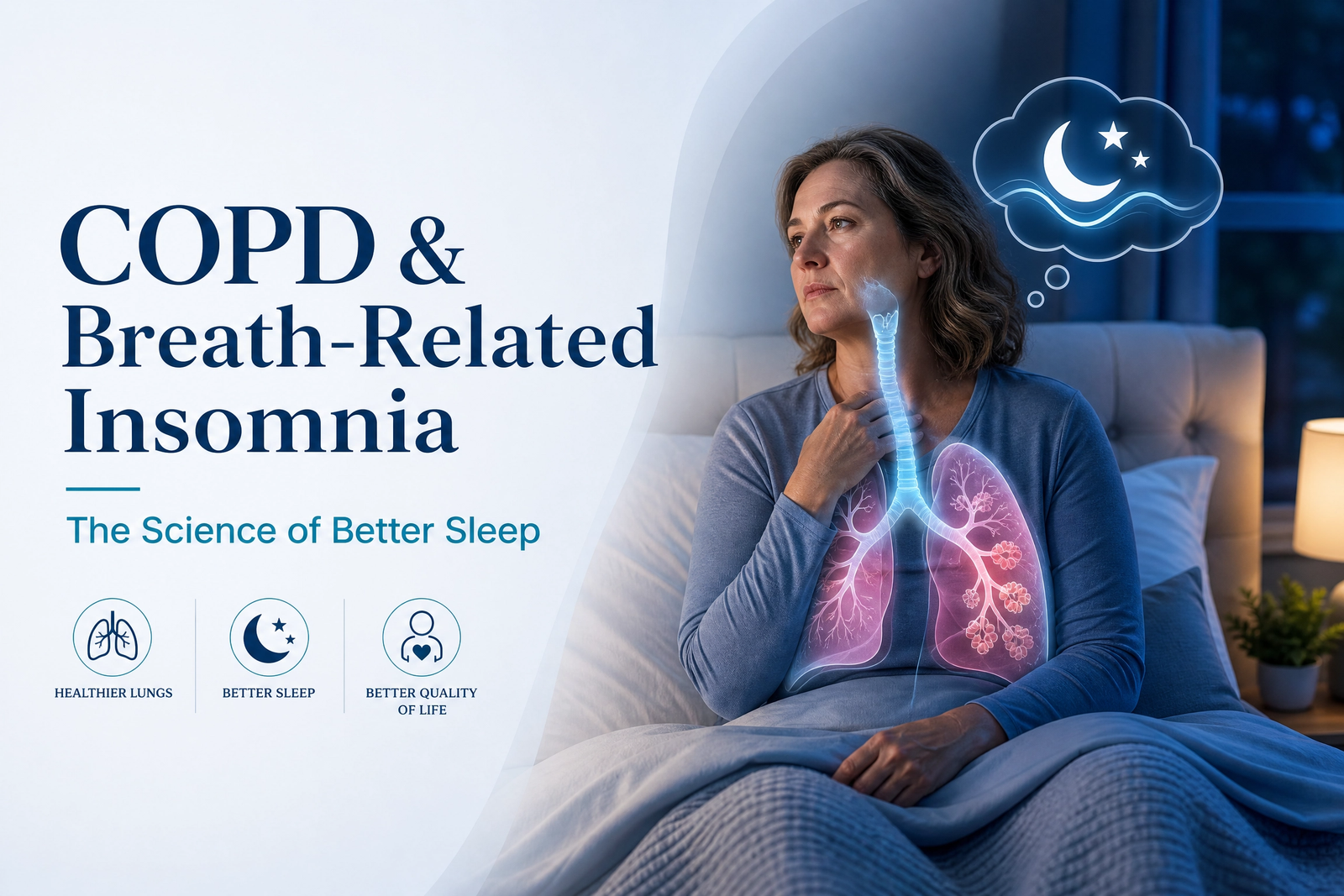
Between 50-75% of COPD patients experience clinically significant insomnia, far exceeding rates in the general population. The mechanisms are multifaceted: nocturnal dyspnea and cough disrupt sleep onset and maintenance; nocturnal hypoxemia triggers protective micro-arousals that fragment sleep architecture; anxiety about breathing creates a conditioned arousal response at bedtime; and circadian disruption alters normal sleep-wake regulation. Additionally, medications used to treat COPD, including beta-agonists and corticosteroids, can themselves produce insomnia as a side effect. The solution requires addressing each mechanism: optimizing medical therapy timing, practicing airway clearance before bed, implementing cognitive-behavioral strategies for sleep anxiety, and engaging in structured breathwork programs like Click here to learn more about BreatheAndSleep.org → that recalibrate the breath-sleep connection and restore healthy circadian patterns.
Why Can’t I Sleep with COPD? The Science of Breath-Related Insomnia
James hadn’t slept through the night in four years. Not since his COPD diagnosis, not since the medications, not since the creeping anxiety that settled over him each evening as he contemplated another night of gasping, pillow-propped semi-consciousness. His physician had prescribed a sleep aid, which helped marginally for a month before the benefits faded. He had tried melatonin, valerian, magnesium, and every over-the-counter remedy the pharmacy stocked. Nothing worked because none of them addressed the fundamental reason he couldn’t sleep: his breathing itself had become the enemy of his rest.
James is among the majority. Studies consistently demonstrate that 50-75% of COPD patients suffer from clinically significant insomnia, compared to 10-30% of the general adult population. This is not a coincidence, a side effect of aging, or a psychological weakness. It is a direct physiological consequence of the disease and its treatment, rooted in mechanisms that are increasingly well understood and, critically, increasingly treatable.
The Vicious Cycle: How COPD Mechanically Destroys Sleep
To understand why COPD patients cannot sleep, one must first understand what sleep requires from the respiratory system. During normal sleep, particularly during the transition from wakefulness to light sleep and into deeper stages, respiratory drive diminishes. Breathing becomes shallower and slightly irregular. Minute ventilation decreases by approximately 15% during non-REM sleep and becomes more variable during REM.
For a person with healthy lungs, these normal sleep-related respiratory changes are barely perceptible. For a COPD patient operating on the margins of respiratory reserve, they can be catastrophic.
Mechanism 1: Dynamic Hyperinflation and Sleep Discomfort
COPD patients often breathe at high lung volumes, with air trapping behind collapsed small airways preventing complete exhalation. During sleep, when respiratory rate decreases and tidal volume diminishes, this dynamic hyperinflation worsens. The result is a sensation of pressure, tightness, and inability to take a satisfying breath that is profoundly incompatible with sleep onset.
Patients describe this sensation variously as “I can’t get my breath out,” “my chest feels tight like a band,” or simply “I can’t relax enough to fall asleep.” They adopt propped positions, sometimes sleeping in recliners or with four pillows, in a futile attempt to reduce the discomfort. But the fundamental problem remains: their respiratory mechanics are incompatible with the physiological requirements of sleep.
Mechanism 2: Nocturnal Cough and Secretion Management
COPD is characterized by mucus hypersecretion and impaired mucociliary clearance. During the day, gravity, movement, and voluntary coughing help manage secretions. At night, supine positioning causes mucus to pool in dependent airways, triggering cough reflexes that shred any possibility of sustained sleep.
The coughing itself creates a secondary problem. Each forceful cough generates positive intrathoracic pressure that further compresses small airways, worsening air trapping. The coughing jag can trigger bronchospasm, creating a spiral of escalating breathlessness that may require rescue inhaler use at 2 AM, further delaying return to sleep.
Mechanism 3: Nocturnal Hypoxemia and Micro-Arousals
As previously discussed, many COPD patients experience significant oxygen desaturation during sleep. The brain does not tolerate hypoxemia passively. When oxygen levels drop below a critical threshold, the arousal system activates, producing a micro-arousal that briefly restores waking levels of ventilation and reoxygenates the blood.
These micro-arousals are often so brief that patients have no memory of them. But they fragment sleep architecture, preventing progression into the deeper, restorative stages of slow-wave and REM sleep. A patient may spend eight hours in bed and technically be “asleep” for six of them, yet never experience sustained deep sleep. The result is the peculiar exhaustion of the COPD insomniac: technically adequate sleep time with profoundly inadequate sleep quality.
The COPD Insomnia Cascade
COPD creates sleep disruption through multiple converging pathways: mechanical (dynamic hyperinflation), secretory (nocturnal cough), gas exchange (hypoxemia), neurobiological (sympathetic activation), pharmacological (medication side effects), and psychological (anxiety conditioning). Effective treatment must address all relevant pathways for the individual patient.
The Neurobiology of Breath-Anxiety-Insomnia
Beyond the mechanical and gas exchange problems, COPD creates a profound psychological barrier to sleep that operates at the level of conditioned learning and autonomic nervous system dysfunction.
For many patients, bedtime becomes associated with fear. The anticipatory anxiety about another night of breathless wakefulness triggers sympathetic nervous system activation before the head even hits the pillow. Heart rate increases. Respiratory rate increases. Airways constrict. The physiological state of anxiety is functionally identical to the state of dyspnea, and the two become inextricably intertwined.
This conditioned response means that simply entering the bedroom, lying down, or attempting to relax can trigger respiratory distress that is as real as any disease-driven symptom. The amygdala, the brain’s fear center, has learned that bedtime equals threat, and it responds accordingly with a cascade of stress hormones that make sleep physiologically impossible.
The autonomic nervous system imbalance compounds this problem. COPD patients frequently show reduced parasympathetic (vagal) tone and elevated sympathetic activity even during waking hours. The normal sleep transition requires a shift toward parasympathetic dominance that these patients cannot achieve. They are stuck in a physiologic state of vigilance and readiness that is fundamentally incompatible with the suspension of consciousness that defines sleep.
Traditional insomnia treatments fail these patients because they address neither the respiratory mechanics nor the autonomic dysfunction at the root of the problem. Sleeping pills may force unconsciousness, but they do not restore normal sleep architecture, and they may further compromise respiratory drive in a population already at risk for nocturnal hypoventilation.
Medication-Induced Insomnia: The Treatment Paradox
Adding insult to injury, several categories of medications used to treat COPD can directly produce or worsen insomnia:
Short-acting beta-agonists: Albuterol and similar medications activate beta-2 receptors throughout the body, including the central nervous system. Tremor, anxiety, and increased arousal are common side effects, particularly when these medications are needed close to bedtime.
Oral corticosteroids: Prednisone and methylprednisolone are notorious for causing insomnia, anxiety, and mood disturbance. Even short courses can produce dramatic sleep disruption that may persist for days after the medication is stopped.
Theophylline: Though less commonly used now, theophylline has a narrow therapeutic window and stimulant properties that frequently produce insomnia, even at therapeutic levels.
Anticholinergics: Ipratropium and tiotropium can cause dry mouth and throat irritation that disrupts sleep, and in susceptible patients may contribute to urinary retention that necessitates nighttime bathroom trips.
Medication management strategies including dose timing adjustment, switching to longer-acting formulations with smoother pharmacokinetic profiles, and minimizing oral corticosteroid exposure can help, but they rarely resolve the insomnia entirely because the disease-driven mechanisms persist independently.
The Respiratory Connection
Respiratory Friends Centre recognizes that insomnia in COPD is not a separate problem requiring a separate solution. It is an integral manifestation of the disease itself, rooted in the same pathophysiology that produces daytime dyspnea. Addressing sleep requires addressing breathing, and addressing breathing requires understanding sleep. This integrated perspective guides everything we publish and recommend.
How Targeted Breathwork Programs Resolve Breath-Related Insomnia
The emergence of structured breathing programs specifically designed for respiratory patients represents a paradigm shift in the management of COPD-related insomnia. Unlike sedatives that force unconsciousness while leaving underlying respiratory dysfunction unaddressed, breathwork targets the root mechanisms connecting lung disease to sleep disruption.
Diaphragmatic retraining reduces mechanical sleep incompatibility: By restoring the diaphragm’s mechanical advantage and reducing reliance on accessory muscles, diaphragmatic breathing training reduces the sensation of breathlessness that prevents sleep onset. Patients report being able to lie flatter, breathe more comfortably, and achieve the relaxation necessary for sleep.
Controlled breathing patterns reduce dynamic hyperinflation: Techniques emphasizing prolonged expiration with pursed-lip or nasal breathing reduce air trapping and allow lung volumes to decrease toward normal. This mechanical improvement directly addresses the chest tightness and pressure that keep COPD patients awake.
Slow breathing restores autonomic balance: Breathing at 4-6 breaths per minute stimulates the vagus nerve and shifts autonomic tone toward parasympathetic dominance. This physiological state is both incompatible with anxiety and conducive to sleep onset. For patients trapped in chronic sympathetic overdrive, this autonomic shift can feel transformative.
Pre-sleep routines recondition the breath-bed association: Structured breathing exercises performed consistently before bed create a new conditioned association. Where bedtime previously triggered anxiety and dyspnea, it now becomes associated with the calming, predictable ritual of breathwork. Over time, this reconditions the amygdala’s threat response and reduces anticipatory sleep anxiety.
Improved nocturnal oxygenation reduces micro-arousals: By strengthening respiratory muscles and establishing more efficient breathing patterns, regular practice reduces the frequency and severity of nocturnal desaturation events. Fewer micro-arousals mean more sustained deep sleep and genuinely restorative rest.
Programs like Click here to learn more about BreatheAndSleep.org → integrate these evidence-based mechanisms into comprehensive protocols designed specifically for respiratory patients who have found that conventional insomnia treatments fail them.
Finally Sleep Through the Night
You don’t have to choose between breathing and sleeping. Discover the breathwork protocol designed specifically for respiratory patients who are tired of being tired.
Click here to learn more about BreatheAndSleep.org →Pros and Cons: Breathwork Approaches to COPD Insomnia
Benefits for COPD Patients
- Addresses root respiratory causes of insomnia rather than masking symptoms
- Restores autonomic balance and reduces anxiety without medication
- Improves daytime respiratory symptoms alongside sleep quality
- No risk of respiratory depression unlike sedative-hypnotics
- No medication interactions or side effects
- Can be practiced at home without special equipment
- Effects improve over time rather than diminishing
- Empowers patient self-management and sense of control
Important Considerations
- Requires consistent practice for 4-8 weeks before maximal benefit
- May need guidance from trained instructor initially
- Not appropriate as sole therapy for severe nocturnal hypoxemia
- Acute exacerbations may temporarily interrupt practice
- Requires commitment to establishing new bedtime routines
- Does not replace optimization of medical therapy
Building a Comprehensive Sleep Restoration Plan
Breathwork forms the foundation, but optimal outcomes require attention to the full context of sleep for COPD patients:
Airway clearance timing: Complete your clearance routine 30-60 minutes before bed, not immediately before lying down. This allows any post-clearance bronchospasm to resolve while ensuring airways are as clean as possible for the night.
Medication optimization: Discuss with your physician whether evening dosing of long-acting bronchodilators might provide better overnight coverage. Consider requesting corticosteroid-sparing strategies if oral steroids are disrupting your sleep.
Sleep environment engineering: Head-of-bed elevation, side-sleeping, optimal humidity (40-50%), and elimination of bedroom allergens all reduce nocturnal respiratory triggers.
Cognitive-behavioral elements: Stimulus control (bed reserved only for sleep), consistent wake times, and cognitive restructuring of catastrophic thoughts about sleep all enhance the physiological benefits of breathwork.
Liquid and salt management: Minimizing evening fluid and salt intake reduces nocturnal fluid shifts that can worsen orthopnea and nocturnal dyspnea in patients with coexisting heart failure.
Frequently Asked Questions
Is it normal for COPD patients to have trouble sleeping?
While extremely common, affecting 50-75% of patients, insomnia should not be considered “normal” or an inevitable consequence of COPD that must be endured. It is a treatable complication of the disease with significant adverse effects on quality of life, cognitive function, and clinical outcomes. Dismissing it as inevitable leads to needless suffering. Effective interventions exist and should be actively pursued.
Are sleep medications safe for COPD patients?
Traditional sedative-hypnotics including benzodiazepines and many non-benzodiazepine receptor agonists can suppress respiratory drive and worsen nocturnal hypoxemia, particularly in patients with baseline hypercapnia. They should be used with extreme caution, if at all, and only under close medical supervision. Some newer agents such as low-dose doxepin or ramelteon may have better safety profiles, but non-pharmacological approaches including breathwork should be the foundation of treatment.
How quickly can breathwork improve my sleep?
The autonomic calming effects of slow, controlled breathing can produce immediate improvement in sleep onset for some patients, experienced from the very first session. However, lasting structural improvements in respiratory muscle function, airway stability, and conditioned anxiety responses typically require 4-8 weeks of consistent practice. Most patients report noticeable improvement within 2-3 weeks, with continued gradual enhancement over the first three months.
Should I use my rescue inhaler if I wake up breathless at night?
Yes. If you wake with significant breathlessness, use your rescue inhaler as prescribed. The goal of breathwork training is to reduce the frequency and severity of these episodes over time, not to eliminate the need for rescue medication when symptoms occur. Track how often you need nighttime rescue inhaler use; decreasing frequency is one of the best indicators that your overall management plan, including breathwork, is working.
Can breathing exercises help if my insomnia is caused by steroids?
Yes, though the mechanism differs. Steroid-induced insomnia operates primarily through central nervous system stimulation rather than respiratory mechanics. However, the autonomic calming and anxiety-reducing effects of structured breathwork can still help counteract steroid-related arousal. Additionally, if breathwork improves your baseline respiratory control, you may be able to reduce steroid dependence through better disease management, indirectly resolving the medication-induced insomnia.
Why does lying flat make my breathing feel worse?
Supine positioning alters respiratory mechanics in several ways: the abdominal contents push the flattened diaphragm upward, reducing its mechanical advantage; dependent lung regions receive more blood flow but may be poorly ventilated, creating V/Q mismatch; and mucus redistribution can pool in posterior airways. Elevating the head of the bed 30-45 degrees often significantly improves comfort by restoring some diaphragmatic function and reducing these mechanical disadvantages.
Can I practice breathing exercises during a COPD exacerbation?
During acute exacerbations, priority should be given to prescribed medical therapy including bronchodilators, corticosteroids, and antibiotics if indicated. Gentle breathing techniques can help reduce anxiety and prevent panic from worsening the episode, but vigorous practice should be deferred until the acute phase resolves. Pursed-lip breathing during an exacerbation is generally safe and helpful. Resume your full practice as symptoms improve.
Will improving my sleep actually improve my lung disease?
While breathwork cannot reverse established structural lung damage, improving sleep quality produces measurable clinical benefits: reduced systemic inflammation, improved immune function, better medication adherence, enhanced exercise tolerance, and reduced exacerbation frequency. The relationship is bidirectional: better breathing improves sleep, and better sleep improves respiratory outcomes. This virtuous cycle is one of the most powerful tools available for slowing disease progression and maximizing quality of life.
Key Takeaways
- COPD-related insomnia affects 50-75% of patients and results from multiple disease-driven mechanisms
- Dynamic hyperinflation, nocturnal cough, hypoxemia, anxiety conditioning, and medication effects all contribute
- Traditional sedatives are often unsafe for COPD patients and fail to address root causes
- Structured breathwork programs target the specific respiratory and autonomic dysfunctions underlying COPD insomnia
- Diaphragmatic retraining, slow breathing, and pre-sleep routines recondition the breath-sleep relationship
- Comprehensive programs like Click here to learn more about BreatheAndSleep.org → integrate evidence-based techniques into effective protocols
- Improving sleep in COPD produces bidirectional benefits that enhance overall disease management
Leave a Reply